
Last updated October 31, 2026
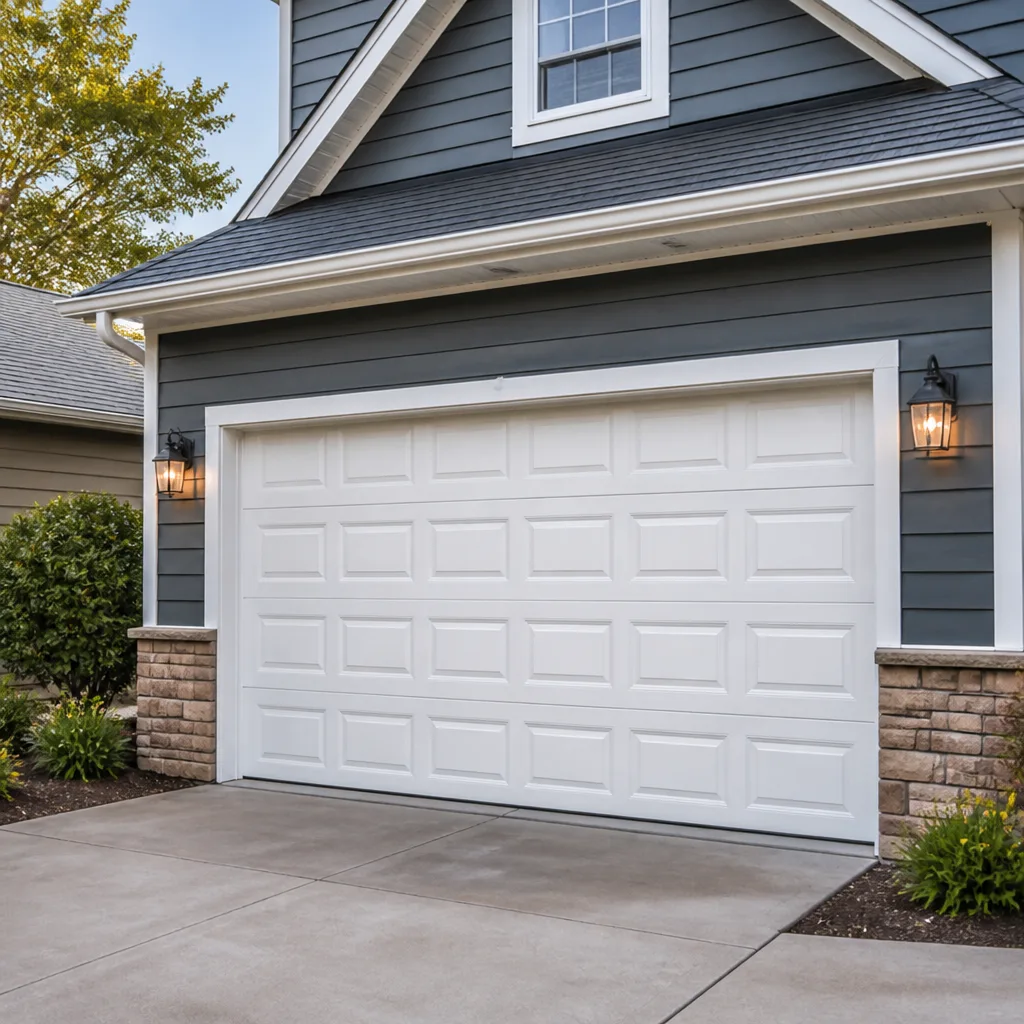 Raised-panel steel
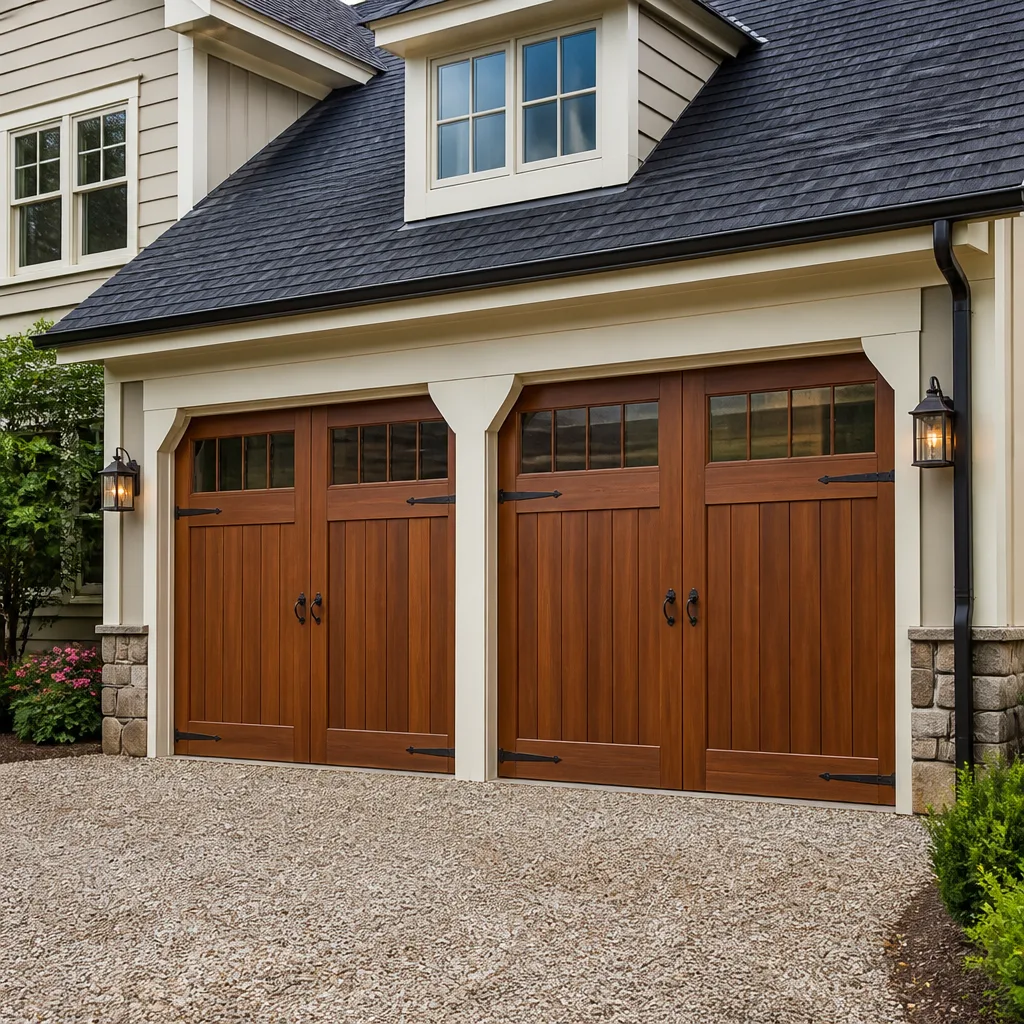 Carriage house
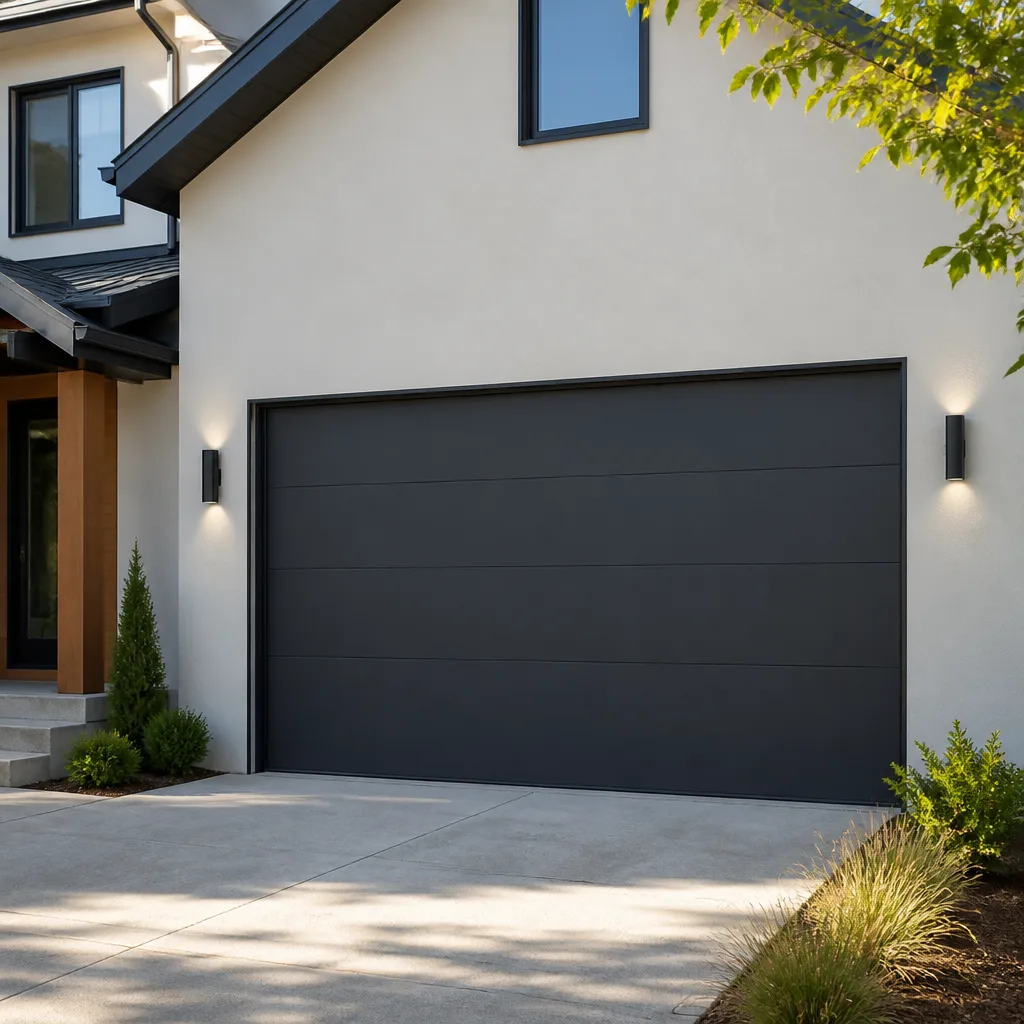 Modern flush
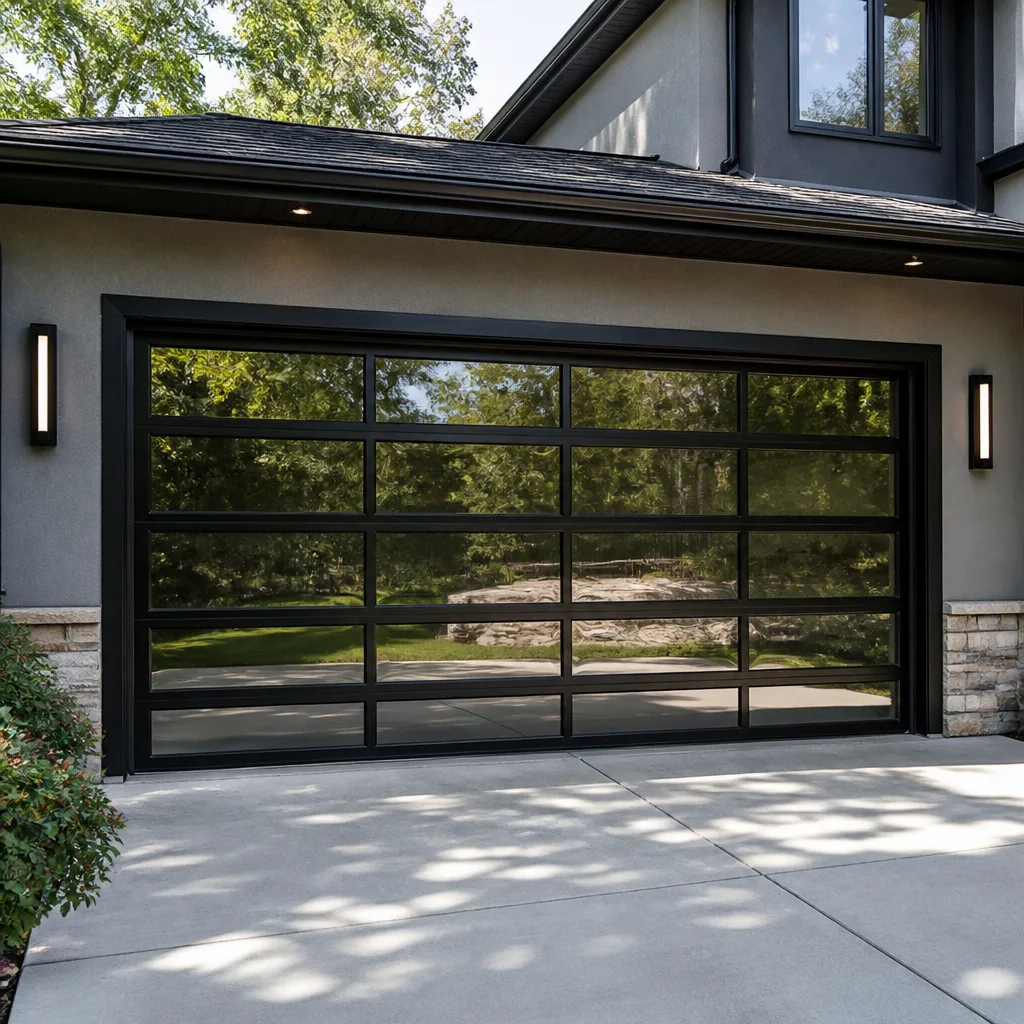 Full-view glass
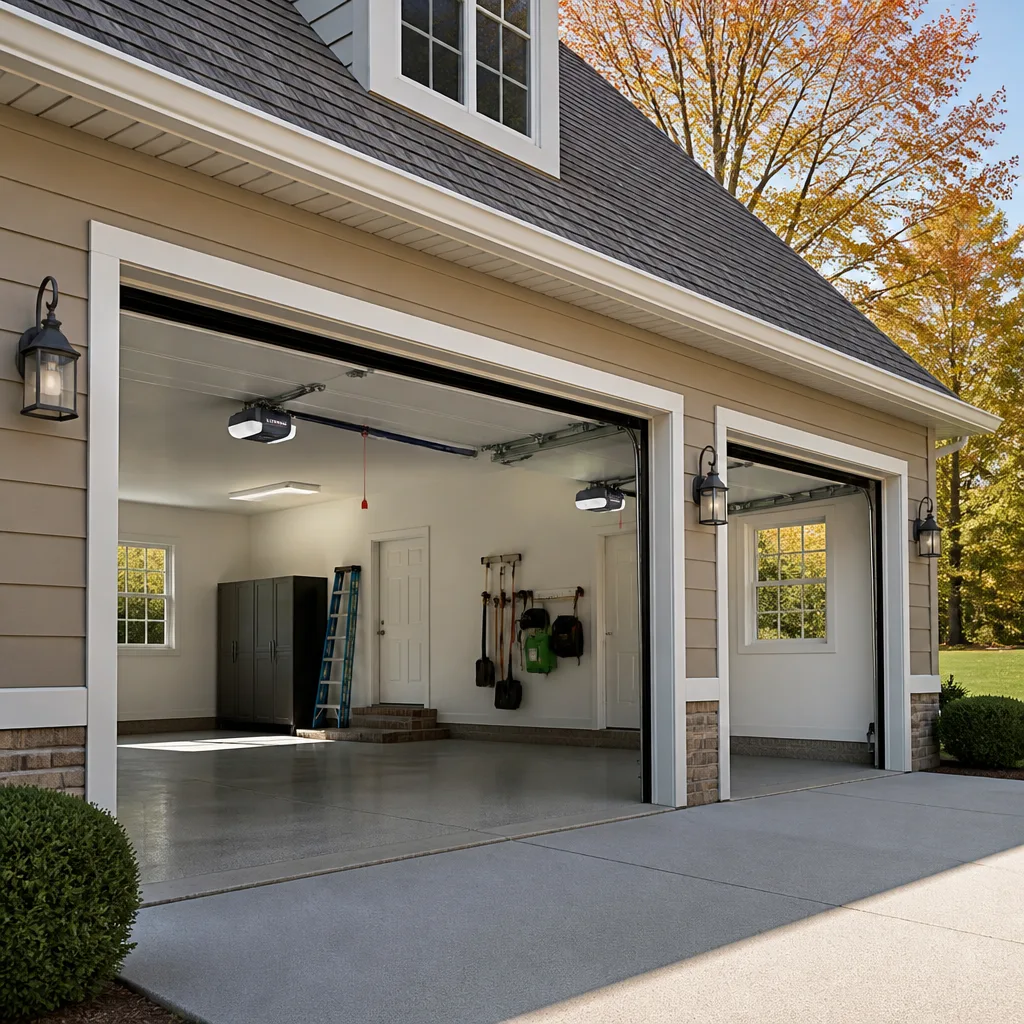 LiftMaster openers
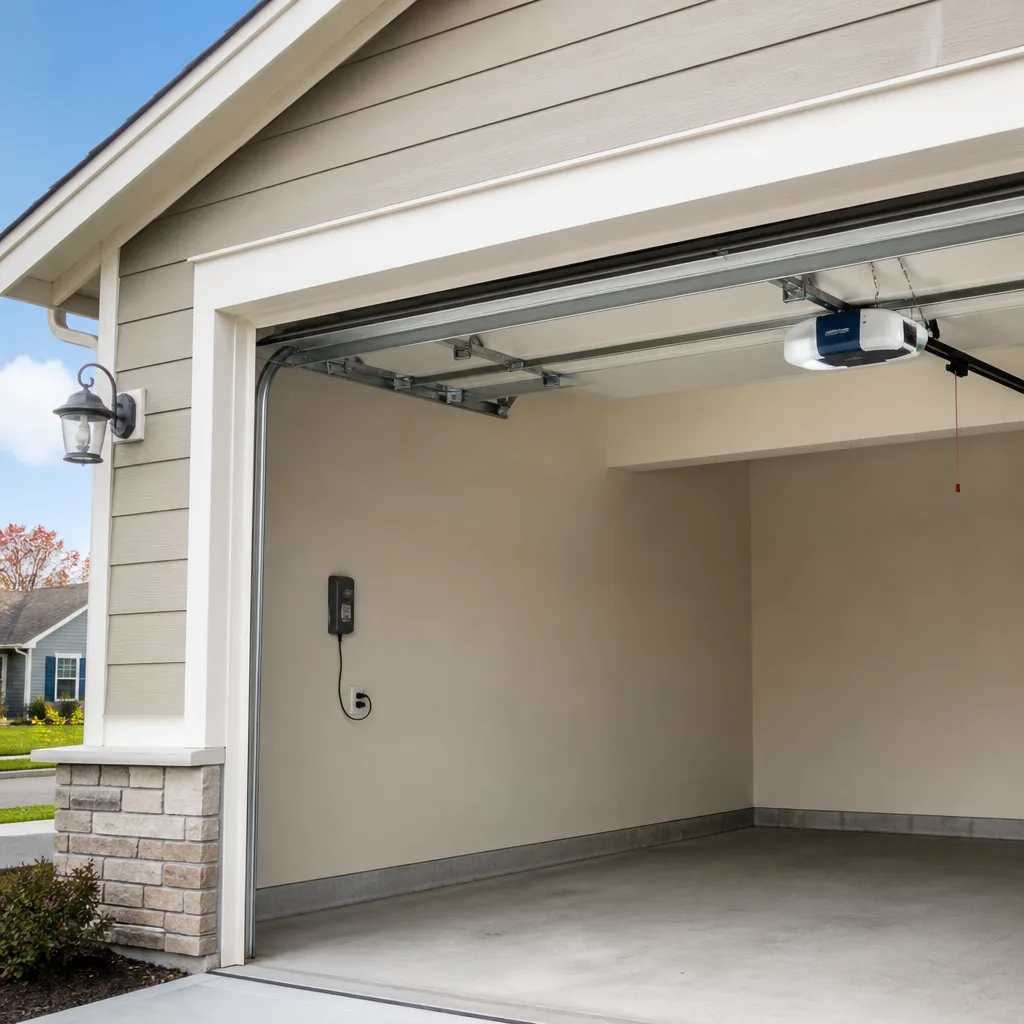 Chamberlain openers
Full 25-point door and opener safety check with every visit - springs, cables, rollers, tracks, and your LiftMaster or Chamberlain opener included
You get a price before we start. It does not change when the truck arrives.
Get your free estimateThe Complete Guide to Garage Door in San Diego
Here’s a fact most national garage door guides miss entirely: a spring that lasts 12 years in Santee can fail in 7 in Coronado. San Diego’s unique combination of marine-layer mornings, salt corridors, and stucco-sided tract housing creates failure patterns you won’t find in a Chicago or Atlanta guidebook. By the time you finish reading, you’ll understand exactly why coastal zip codes like 92037 and 92118 chew through hardware faster than inland El Cajon or Poway, which door materials actually survive San Diego’s microclimates, and how to make repair versus replace decisions with your eyes open. This guide is written from the field, not a template.
Quick Answer
Garage door ownership in San Diego means matching your door materials, springs, and opener to a coastal or inland microclimate, then maintaining the system on a schedule based on your specific zip code—our more guides & resources cover each topic in depth. Salt air in coastal zones accelerates spring and cable corrosion by 30 to 50 percent compared to inland areas, while stucco-sided homes require different bracket mounting than wood-frame construction. Most San Diego homeowners need a spring replacement every 7 to 12 years, an opener refresh every 10 to 15 years, and a full door replacement every 20 to 30 years.
Styles & brands we work with
Table of Contents
- Why San Diego’s Climate Wears Garage Doors Differently
- Coastal vs. Inland: How Your Zip Code Changes Everything
- Door Materials That Survive San Diego’s Microclimates
- Common Brand Configurations in San Diego Housing Tracts
- The Stucco Factor: Bracket Mounting on San Diego Homes
- Earthquake-Adjacent Geology and Track Alignment
- A Maintenance Schedule Built for San Diego
- Repair or Replace: Making the Honest Call
Why San Diego’s Climate Wears Garage Doors Differently
San Diego gets billed as having America’s most forgiving weather. For your garage door, that’s only half true. The same marine layer that keeps your July afternoons pleasant is also depositing a fine film of salty condensation on your springs, cables, and hinges every single morning. The problem compounds because homeowners don’t see it happening. Unlike rain or snow, this corrosion builds silently and then fails suddenly.
Here’s what we see across San Diego service calls week after week:
- Spring failures in coastal zones happen faster than any national warranty chart predicts. Torsion springs rated for 10,000 cycles are failing at the 7,000 to 8,000 cycle mark in areas like La Jolla, Del Mar, and Coronado. The salt and moisture work into the spring steel, accelerating fatigue cracking.
- Cable fraying is the most common coastal call we take. The lifting cables that carry the door’s weight rub against drums dozens of times per cycle. Salt-accelerated pitting on the cable surface causes strands to snap prematurely. Inland, this same cable might last 15 years. At the beach, 8 to 10 years is typical.
- Hinge and roller corrosion creates noise first, failure second. If you’re hearing a grinding or squeaking sound every time the door moves, the metal-on-metal wear has already started. Coastal homeowners should treat new noises as an early warning, not a background annoyance.
- Electronic opener components are not immune. Wall buttons, safety sensors, and even circuit boards exposed to garage humidity near the coast develop oxidation that triggers intermittent failures: door stops halfway, reverses for no reason, or won’t respond to the remote. Many “broken” openers in coastal San Diego are actually corroded connections.
The pattern is clear: San Diego’s mild temperatures extend the life of some components while its marine air shortens others. A national guide that says “springs last 10 years” is giving you bad information if you live west of I-5. This is exactly why Garage Door Repair in San Diego requires local field experience, not just a manual and a wrench.
Coastal vs. Inland: How Your Zip Code Changes Everything
San Diego is not one climate. It’s a patchwork of microclimates that change the lifespan of every metal component on your garage door. The critical dividing line is roughly Interstate 5, though elevation and canyon geography shift the boundary block by block.
Coastal Zones (92037, 92014, 92118, 92109, 92107)
In La Jolla, Del Mar, Coronado, Pacific Beach, and Ocean Beach, the marine layer is a daily visitor. Salt content in the air near the beach can be 5 to 10 times higher than just three miles inland. Here’s what that means for hardware:
- Spring replacement cycle: 6 to 9 years, regardless of the 10,000-cycle rating on the box.
- Cable replacement: Plan on 8 to 12 years. Inspect annually for pitting and fraying after year 5.
- Hinges and brackets: Galvanized or powder-coated hardware only. Raw steel will show rust within 18 months.
- Opener lifespan: The opener itself often survives, but wall controls and safety sensors fail early. Budget for a control replacement around year 8.
Inland Zones (92020, 92071, 91977, 92119)
El Cajon, Santee, Spring Valley, and San Carlos see higher daytime heat and lower humidity, with no consistent salt exposure. The failure pattern shifts from corrosion to heat cycling and dust accumulation.
- Spring replacement cycle: 9 to 13 years. Dry heat is far kinder to spring steel than salt air.
- Dust and grit in tracks: Inland homeowners should clean and lubricate rollers and tracks more often. Fine dust acts as an abrasive, wearing nylon rollers faster than coastal owners would expect.
- Weatherstripping degradation: Intense sun exposure through hot afternoons dries out rubber seals. Inland stripping often cracks and fails before coastal stripping corrodes.
- Opener motor heat stress: Garages in Santee or El Cajon can hit 110°F plus on a summer afternoon. That heat shortens capacitor life in opener motors. Expect a capacitor replacement or full opener swap around the 10-year mark.
We bring this up because the repair that makes sense for a house in Mission Hills may be overkill for a house in Rancho San Diego. The door tells you what it needs based on where it lives.
Door Materials That Survive San Diego’s Microclimates
Choosing a garage door in San Diego is not purely an aesthetic decision. Material selection directly affects how often you’ll be paying for repairs and how long the door will look decent. Here’s the honest breakdown from the field:
Steel Doors: The San Diego Default
Most homes in San Diego County, from tract housing in Mira Mesa to newer construction in Otay Ranch, have steel garage doors. Steel handles inland San Diego beautifully. It’s affordable, dent-resistant enough for daily use, and holds paint well. The problem is exclusively coastal: even galvanized steel eventually surrenders to salt air at the seams and edges, where the galvanization is thin. If you’re within two miles of the ocean, expect visible rust at panel edges by year 12 to 15. Inland, the same door can go 25 years with minimal edge corrosion.
What works: A properly primed and painted steel door with a powder-coated finish will be serviceable for decades inland. Coastal buyers should look for doors with factory-applied rust-inhibiting primer and plan on a repaint every 5 to 7 years.
Aluminum Doors: Lightweight but Specific
Aluminum doors are common on modern and mid-century homes in areas like Clairemont and University City. They resist rust far better than steel, which makes them a logical coastal choice. The tradeoff: aluminum dents more easily, and the lighter weight means the door depends more on its springs and cables for balance. An under-tensioned spring on an aluminum door translates into a visibly crooked panel faster than it would on a heavier steel door.
Wood Doors: Beautiful, High-Maintenance, Honest Advice
Custom wood garage doors look stunning on Spanish Revival and Craftsman homes in neighborhoods like Kensington, Mission Hills, and Bankers Hill. But wood in San Diego’s climate is a commitment. Inland, the dry heat shrinks and cracks the panels. Coastal, the moisture causes warping and paint adhesion failure. Wood doors require resealing every 2 to 3 years regardless of location. We tell homeowners considering wood doors exactly this: they are a lifestyle choice. If you’re not prepared for the maintenance schedule, you’ll be looking at a warped door by year five. Most San Diego homeowners with wood doors did not choose them; they inherited them from a previous owner who valued aesthetics over practicality.
Composite and Vinyl: The Quiet Contender
Composite doors, particularly those from Amarr and Clopay, have gained real traction in San Diego over the last decade. They combine the dent resistance of steel with rust-proof properties that coastal buyers need. We’re seeing more composite doors in coastal remodels now because they solve the salt air problem without demanding a wood maintenance schedule. The upfront cost runs higher than steel, but the reduced repair frequency in coastal zones makes the math work for a long-term owner.
Vinyl: The Coastal Budget Option
Vinyl doors hold up surprisingly well against salt air. They don’t rust, they don’t corrode, and they don’t need paint. The limitation is structural: vinyl doors flex more than steel, which makes them less suitable for wide two-car openings where rigidity matters. For a single-car coastal garage, a well-built vinyl door is a legitimate low-maintenance choice. For a double-wide in Del Mar, we’d steer you toward composite or a high-quality galvanized steel option instead.
Choosing the right material starts with understanding your specific exposure. A door that is perfect for a house in North Park may be completely wrong for a condo in Imperial Beach. That’s the core of what Garage Door Installation in San Diego should begin with: a conversation about where you actually live, not what looks good in a catalog.
Common Brand Configurations in San Diego Housing Tracts
San Diego’s housing stock was built in distinct waves, and each wave came with its own era of garage door brands. Knowing what’s likely installed on your home helps you understand what to expect for parts availability, repair cost, and whether an upgrade makes sense.
1970s and 1980s Tract Housing
Neighborhoods like Tierrasanta, Scripps Ranch, and parts of Chula Vista were built with wood or early steel doors. If the original door survives, it’s almost certainly wood and almost certainly warped. More common today: a replacement steel door installed in the 1990s or early 2000s. Openers from this era are frequently Genie or Craftsman chain-drive units. Parts for these openers are still widely available, though the gears and sprockets wear out after 15 to 20 years. The doors themselves are often worth keeping if the panels are straight and the rust is surface-level only.
1990s and 2000s Master-Planned Communities
Carmel Valley, 4S Ranch, Eastlake, and Otay Ranch saw huge construction booms during this window. Builders installed steel doors from Clopay, Amarr, and Wayne Dalton in massive quantities. The Wayne Dalton TorqueMaster spring system deserves special mention: it’s internally mounted, visually distinct from a standard torsion spring, and many homeowners don’t realize they have it until the spring fails. TorqueMaster springs have a shorter average lifespan in coastal zones because the internal tube traps moisture that accelerates corrosion. If your Carmel Valley home still has its original Wayne Dalton door from the early 2000s, the springs are on borrowed time.
2010s to Present
Newer construction across San Diego County, from Del Sur to Civita in Mission Valley, features modern steel and composite doors paired with belt-drive openers. Smart-home integration is standard: LiftMaster and Chamberlain myQ systems dominate. These openers are reliable, but the wall controls and wireless receivers are more sensitive to coastal moisture than the older chain-drive units. Salt air corrosion on a myQ wall console can cause erratic behavior that looks like a logic board failure. Often, replacing the wall control solves it.
Our point here is not to turn this into a brand history lesson. It’s to help you understand that the right repair approach depends on what’s actually installed on your house. A technician who shows up with a universal parts kit and a vague plan is guessing. We carry parts for Genie, Clopay, Amarr, and Wayne Dalton systems on the truck precisely because San Diego’s housing stock spans five decades of door hardware. Your opener is not a mystery to us; it’s a model we see every week.
The Stucco Factor: Bracket Mounting on San Diego Homes
Here’s something national garage door guides never mention: the majority of single-family homes in San Diego County are stucco-sided, and stucco changes how door hardware must be mounted and maintained.
Stucco is a cement-based exterior finish, typically three layers thick over a wood or metal frame. It’s durable, fire-resistant, and perfectly suited to San Diego’s climate. But stucco does not hold fasteners the way wood siding does. When a garage door technician mounts track brackets, hinges, or opener hangers to a stucco wall, the fastener must pass through the stucco layer and bite into the structural framing behind it. A mount anchored only in the stucco itself will eventually crack the finish, loosen, and allow the track to shift under load.
Here’s what competent mounting looks like on a stucco home:
- Locate the structural stud or header behind the stucco. This requires a stud finder or knowledge of typical framing patterns in your specific tract. Guessing leads to anchors in dead space.
- Predrill through the stucco with a masonry bit. Skipping this step causes the stucco to crack around the screw hole, which creates a pathway for moisture intrusion.
- Use lag screws of appropriate length to reach at least 1.5 inches into the framing. A screw that only bites the stucco layer will fail under the repeated vibration of door operation.
- Seal around the bracket base. Exposed stucco holes wick moisture into the wall cavity. A proper installation seals the penetration point.
- Check bracket torque every 2 to 3 years. Humid coastal air and stucco expansion cycles gradually loosen fasteners. A bracket that’s slightly loose lets the track flex, which accelerates roller wear and causes the door to run rough.
We see the consequences of bad stucco mounting regularly: tracks that have pulled away from the wall by half an inch, bracket screws hanging loose, and in the worst cases panels binding against the frame because the track shifted out of alignment. The repair is not complicated, but it’s also not a five-minute fix. It means properly re-anchoring the affected bracket into the framing and realigning the track. If you notice your door rattling against tracks that used to fit snugly, or if you see hairline cracks radiating from bracket screws in the stucco near your door opening, the mounting is failing and should be addressed before it gets worse.
Earthquake-Adjacent Geology and Track Alignment
San Diego sits on the edge of earthquake country, and even without a major seismic event, the ground here moves. This affects garage door alignment in ways that surprise homeowners.
The relevant terrain feature is not the San Andreas Fault itself but the network of smaller faults and the expansive clay soils found across much of the county. Expansive clay swells when wet and shrinks when dry, causing foundation slabs to shift by fractions of an inch over decades. Those fractions add up. A garage floor slab that was level when your house was built in 1995 may now be out of level by a quarter to half an inch. The door tracks, originally installed perfectly plumb, are now forced to compensate for a floor that is no longer parallel to the header.
Symptoms of geological drift in your garage door:
- The door sits visibly uneven when closed. One side touches the ground while the other side shows a gap, even though the door itself is not bent.
- The door rubs against one track more than the other during travel. You may hear a persistent scraping sound at one specific point in the cycle.
- Gaps appear at the top corners on one side. The weather stripping compresses on one side and lets daylight through on the other.
- The auto-reverse sensor beam becomes unreliable. The sensors at the bottom of the track are no longer pointing directly at each other because the track bases have shifted independently.
- Visual inspection of springs and cables. Look for rust spots on the torsion spring, especially near the bearing plates. Look for frayed strands on the lifting cables. In coastal zones, this check is non-negotiable.
- Listen for new sounds. Run the door through a full cycle with the opener disengaged. A door that is getting louder at the hinges or rollers is telling you something. Do not ignore a new grinding or metallic scrape.
- Lubricate rollers, hinges, and springs. Use a silicone-based garage door lubricant or white lithium grease. Do not use WD-40, which strips existing lubrication and attracts dust. Coastal homeowners should wipe down metal surfaces with a dry cloth first to remove salt film before applying fresh lubricant.
- Test the auto-reverse safety feature. Place a 2×4 or roll of paper towels under the door’s path and close it. The door should reverse within 2 seconds of contact. This is a mandatory safety test, not an optional one.
- Check balance. Disconnect the opener and manually lift the door halfway. It should stay put. If it drifts up or falls, the springs are outside their safe operating window and need adjustment or replacement.
- Inspect weatherstripping. San Diego sun bakes rubber seals. Look for cracks, brittleness, and gaps. Replace any section that is no longer pliable.
- Tighten all hardware. Door panels, track brackets, and opener mounts all work loose with normal use. A socket set and 20 minutes prevent premature wear.
- The door is less than 10 years old. Modern steel and composite doors have a service life well beyond a decade. If the failure is a spring, cable, hinge, or opener issue, repairing it puts you back in service without spending money prematurely.
- The panels are structurally sound and rust-free. Even a 15-year-old door with straight panels and minimal edge corrosion is worth repairing. The hardware components that fail (springs, cables, rollers, openers) are replaceable parts, not reasons to replace the whole door.
- The issue is isolated to one component. A broken spring doesn’t mean the door is dying. It means a wear part wore out. Replacing the component restores function for years.
- The door has sustained panel damage. A car bump, a sports ball, or a pressure washer hit can dent or crack a section. If multiple sections are damaged, or if the damage affects the door’s structural integrity, replacement is the honest recommendation.
- Rust has reached the point of structural compromise. Surface rust is cosmetic. Rust that has eaten through panel edges or sagged the bottom rail is structural. Coastal homeowners sometimes discover this at year 15 to 20 on a steel door. The door is not repairable; it’s replaceable.
- The door is wooden and severely warped. Warped wood panels can’t be un-warped. Rebuilding a wood door section is possible, but the cost approaches replacement of the full door, and the remaining old sections will warp next.
- You want modern features. If your current door is original to a 1980s house, upgrading to an insulated steel or composite door with a smart opener changes your daily experience significantly. This is a want, not a need, but it’s a legitimate reason to replace a door that technically still functions.
Here’s the important part: this is not a rare occurrence. In certain inland neighborhoods with highly expansive soils, we see alignment drift as the primary issue on roughly one in five service calls. The fix is not to bend the door or force it. The fix is to adjust the track brackets and sometimes remount the bottom brackets on the door itself to restore proper geometry. The door should be balanced so it holds position at the halfway point regardless of the slight floor slope. Alignment correction is a precise job: get it slightly wrong and you create a new wear pattern that shortens the life of rollers, hinges, and springs. Every time we do this work in San Diego, the goal is to restore a door that runs smoothly and quietly on a floor that is no longer perfectly flat. That’s a local problem with a local solution.
A Maintenance Schedule Built for San Diego
Most maintenance advice you’ll find online is written for four-season climates. San Diego’s maintenance calendar looks different because the environmental pressure points are different. Here’s a schedule that matches the actual failure patterns we see in this region.
Every 3 Months
Every 6 Months
Annually
If this schedule sounds like a lot, it’s really about 30 minutes of cumulative attention per year. The payoff is avoiding a spring failure at 7 a.m. on a Monday, or a door that gets stuck open overnight in a neighborhood you’d rather keep closed up. For homeowners who want a professional to handle the full inspection, most reputable San Diego door companies offer a maintenance visit that covers all of the above in a single call. For more detail on what a repair visit involves, see our Garage Door Repair in San Diego page.
Repair or Replace: Making the Honest Call
The number one question we hear in San Diego is whether to repair an existing door or replace it entirely. The answer is never the same for two different houses, which is exactly why a specialist who sees your specific door is more useful than a guidebook. That said, here are the honest decision points we walk through with every customer.
When Repair is Clearly the Right Call
When Replacement Makes More Sense
We’ve built our entire approach around giving homeowners the unvarnished truth on this question. Repairing a door that’s near the end of its life is a disservice, and replacing a door that has years of life left is an upsell. If you’re weighing this decision and want a second opinion from someone whose only trade is garage doors, Eagle Garage Door Service home is the place to start. We service all major brands including Genie, Clopay, Amarr, and Wayne Dalton, and we’ll tell you what we’d do if it were our house.
Common Mistakes to Avoid
- Using the wrong lubricant. WD-40 on a garage door is worse than no lubricant at all. It strips the existing grease and attracts dust that accelerates wear. Use silicone spray or white lithium grease on rollers, hinges, and springs only.
- Ignoring a door that’s slightly crooked. In San Diego, a slight tilt in the closed door often signals soil settlement or stucco bracket failure. It won’t correct itself, and running the door while it’s out of alignment accelerates roller and track wear.
- Buying springs based on the national 10,000-cycle rating. In coastal zones, salt air shortens spring life by 30 percent or more. If you’re within two miles of the ocean, plan on spring replacement every 7 to 9 years regardless of what the box says.
- Unplugging the safety sensors. When safety sensors get dirty or misaligned in humid coastal garages, the door reverses for no obvious reason. The solution is cleaning and realigning the sensors, not permanently disconnecting them. A door without functional auto-reverse is a serious safety hazard.
- Attempting torsion spring replacement as a DIY project. Torsion springs are under enormous tension. The winding and unwinding procedure can cause severe injury or death if done incorrectly. This is one repair that should always be left to a trained professional with the proper winding bars.
- Waiting for a cable to snap before calling. A frayed cable is a visible warning that the cable is about to fail. When it does fail, the door can come down hard and unevenly, damaging panels and potentially causing injury. If you see loose strands on your lifting cables, replace them immediately.
- Choosing a door for looks without considering the microclimate. A red steel door that looks perfect in a catalog will show edge rust in Del Mar within a decade. Material selection should account for your specific San Diego zip code, not just your curb appeal goals.
See the difference
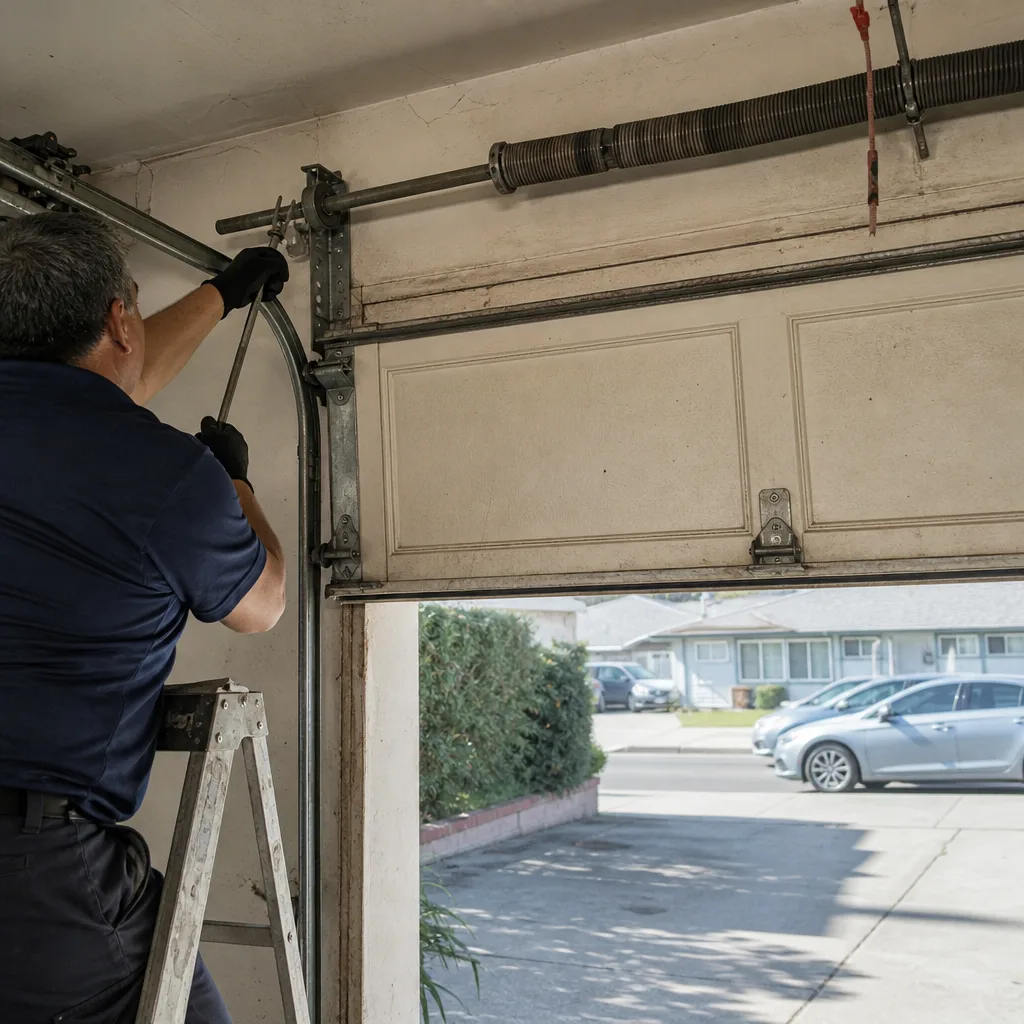 Before
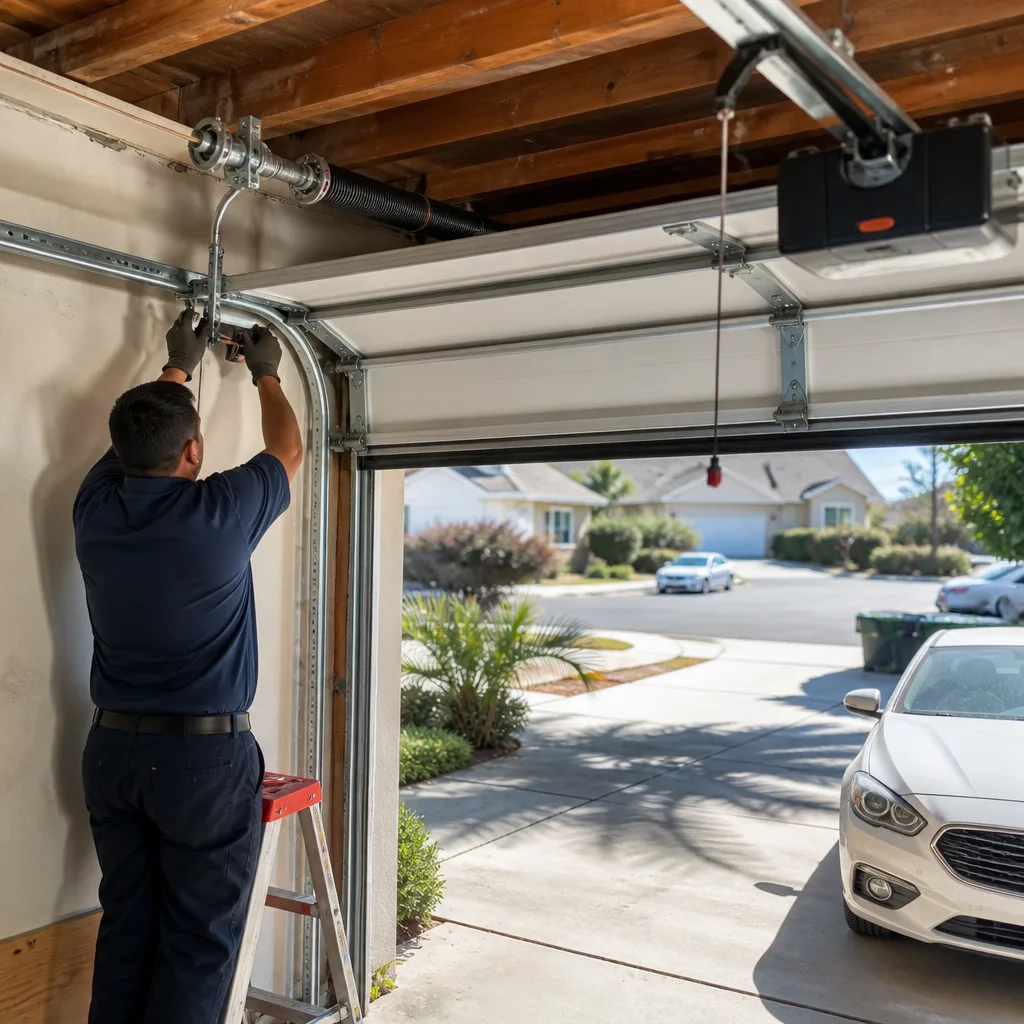 After
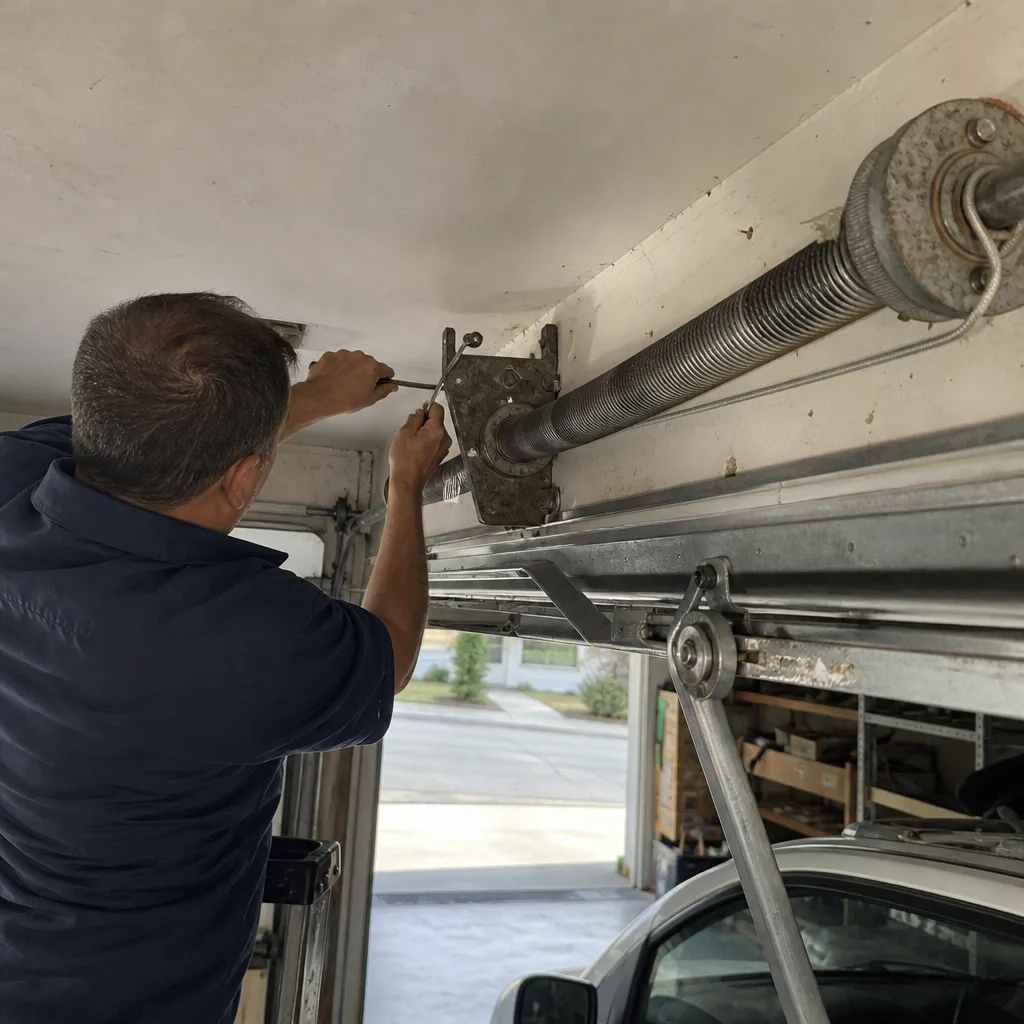 Before
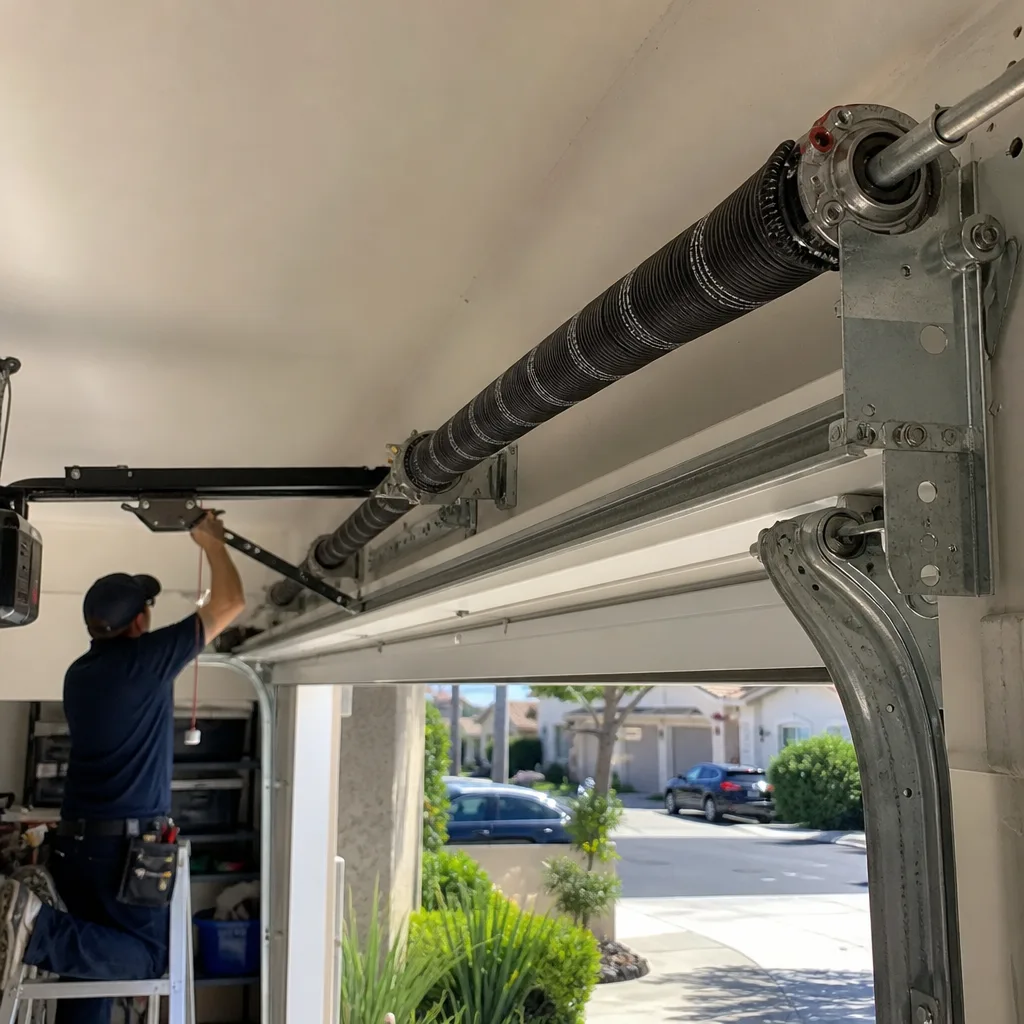 After
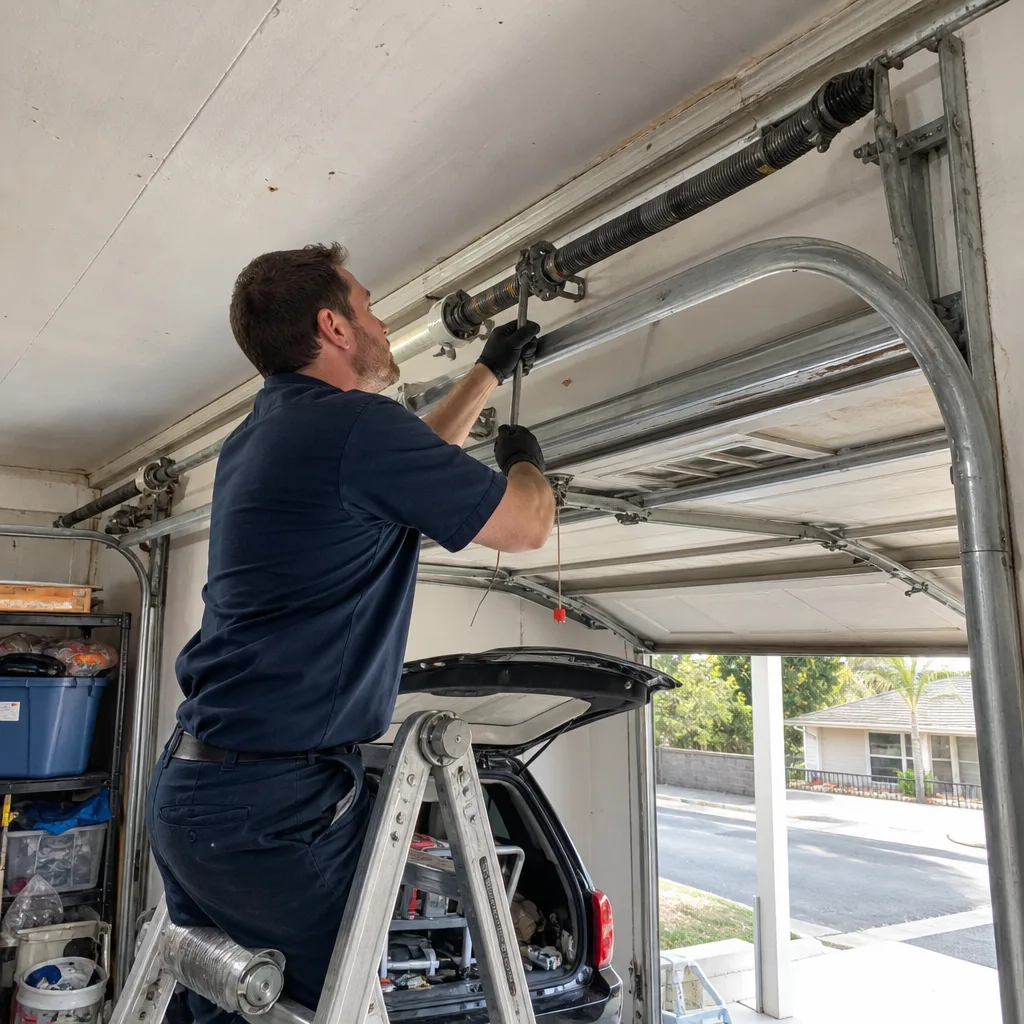 Before
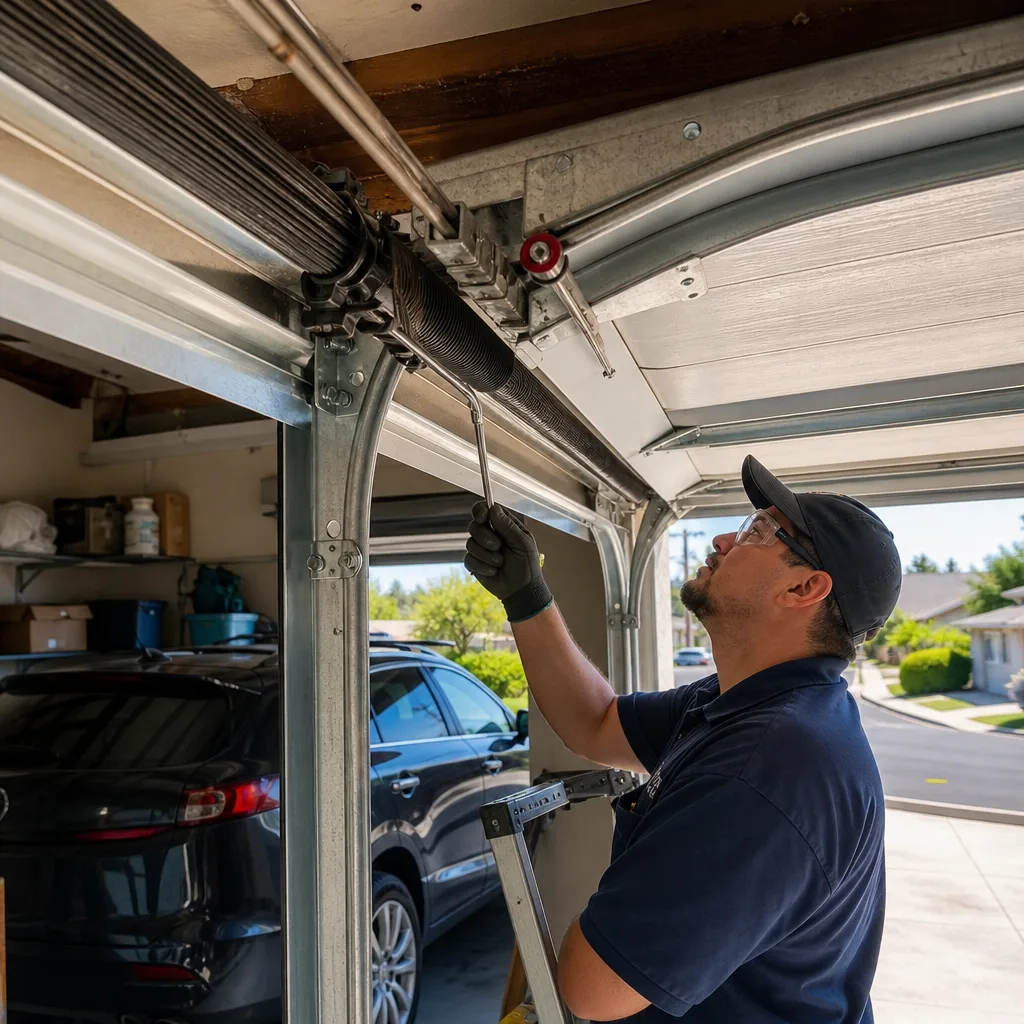 After
When to Call a Professional
There are garage door issues you can safely observe and maintain on your own, and there are situations that genuinely require a trained technician—see our DIY vs Professional Garage Door: The San Diego Homeowner’s Decision Guide for where to draw that line. If your door has a broken torsion spring, a frayed or snapped cable, an opener that won’t reverse on contact, or a panel that has come off its track, call a professional. These are high-tension, high-weight components that can cause serious injury when handled incorrectly. The same logic applies to any job that requires removing or re-tensioning a spring. If you’re in San Diego and you’re not sure whether your issue falls into the safe or dangerous category, Eagle Garage Door Service offers free estimates in San Diego – call (888) 783-4032 and describe what you’re seeing. We’ll tell you over the phone whether it’s safe to continue using the door or whether you should leave it closed until a technician arrives.
Frequently Asked Questions
Garage door spring replacement in San Diego typically costs between $180 and $380 per spring, including the part and labor. The final price depends on your door’s weight and height, whether you need one spring or two, and whether you live in a coastal area where rust-resistant springs are recommended. Call (888) 783-4032 for an exact quote on your specific door, free of charge.
Inland San Diego garages can still produce door rust when the garage itself traps moisture from car tires, water heaters, or lack of ventilation, and that humidity condenses on the door hardware. Even without salt air, condensation on steel components causes surface rust, especially at panel edges and bolt holes. Cleaning and lubricating your hardware twice a year slows the process significantly.
Opener installation is physically possible for a determined homeowner, but it involves heavy lifting, precise chain or belt tensioning, and critical safety sensor alignment. A sensor beam that is off by a quarter inch will cause the door to reverse unexpectedly or fail to close. If you want the safety features working correctly on the first try, a professional installation is a better use of your time.
A belt drive opener uses a reinforced rubber belt to move the door, making it noticeably quieter than a chain drive, which uses a metal chain. For San Diego homeowners with a bedroom or living space above or beside the garage, the quieter belt drive is usually worth the price difference. Chain drives remain common on older San Diego homes and are perfectly functional, just louder.
A well-maintained steel garage door within two miles of the coast should be replaced every 15 to 20 years due to edge rust and panel degradation. Inland, the same door can last 25 to 30 years with proper maintenance. Composite doors are beginning to push those numbers higher for coastal zones, but real-world data is still accumulating.
In humid coastal conditions, the safety sensors at the base of the track accumulate condensation and spray residue that scatters the infrared beam, making the opener think there’s an obstruction in the door’s path. Cleaning the sensor lenses with a dry cloth and ensuring they’re properly aligned usually resolves the issue. If the problem persists, the sensor itself may need replacement – call (888) 783-4032 and we’ll help you diagnose it over the phone.
The Bottom Line
Your San Diego garage door lives in a specific environment, and that environment dictates how it ages. Coastal homeowners should plan for earlier spring and cable replacement, choose materials that handle salt air, and stay on a maintenance schedule that accounts for marine-layer moisture. Inland homeowners face different pressures: heat, dust, and expansive soils that shift track alignment. The right door material, the right hardware, and the right maintenance approach all depend on your specific zip code. When repair decisions come up, the honest answer is usually repair for younger doors and replacement for doors past their structural prime. For a specialist who can tell you which side of that line you’re on, call Garage Door Opener Repair in San Diego or our full-service team for an honest assessment.
Written by the team at Eagle Garage Door Service, serving San Diego since 2015.