Last updated October 31, 2026
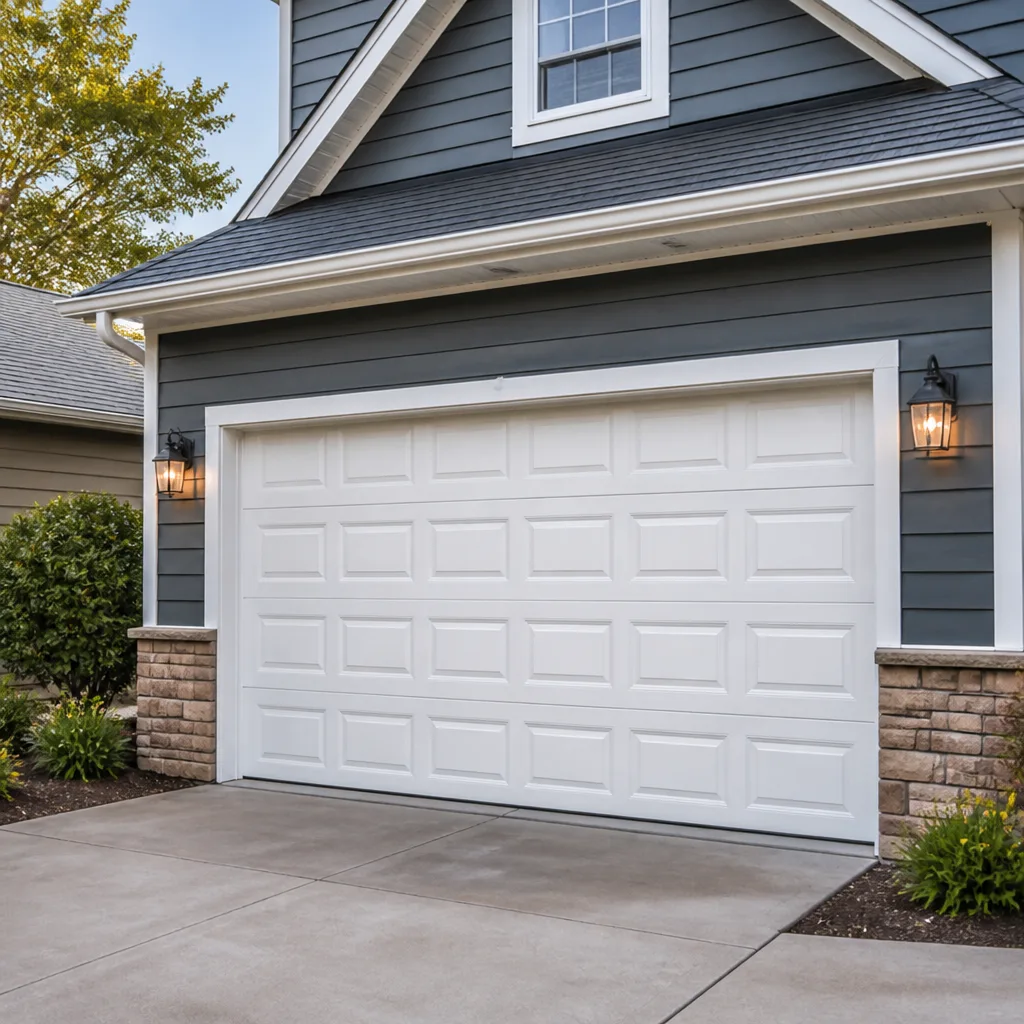 Raised-panel steel
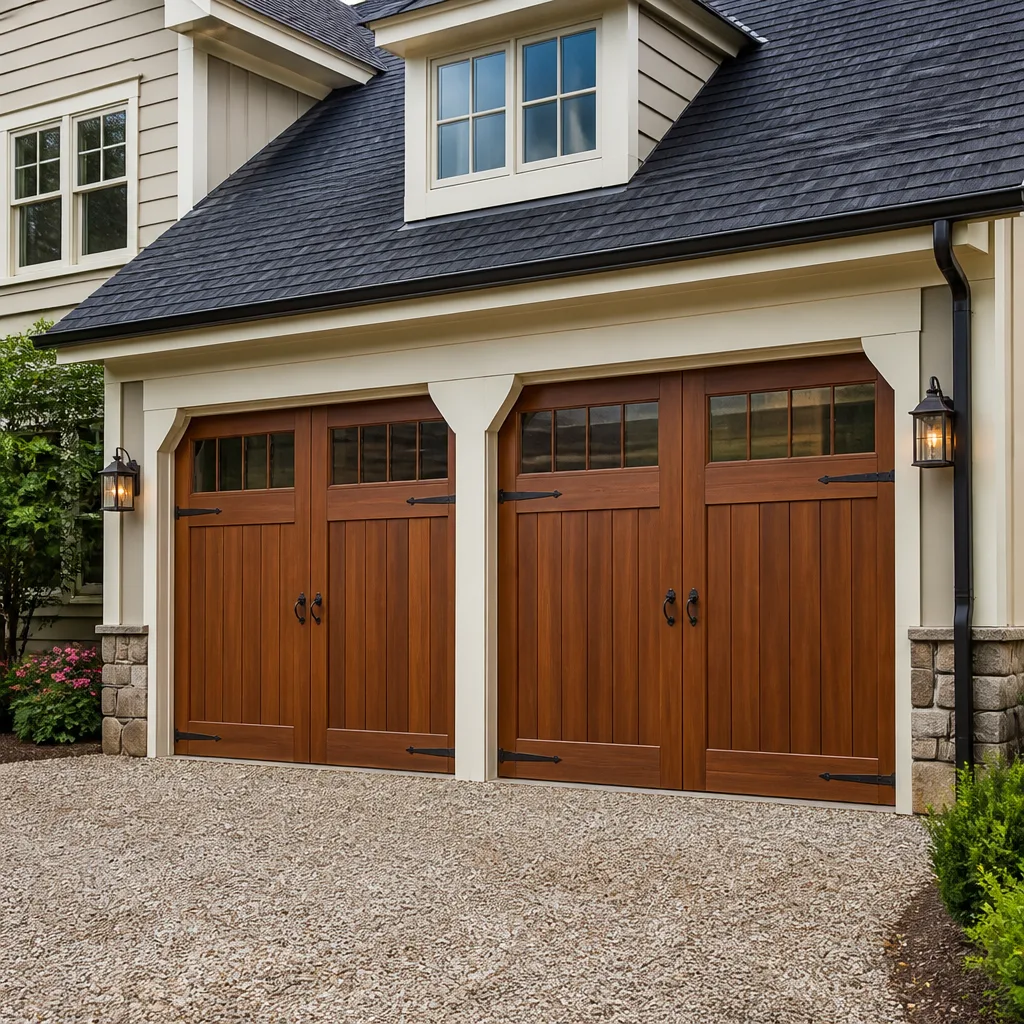 Carriage house
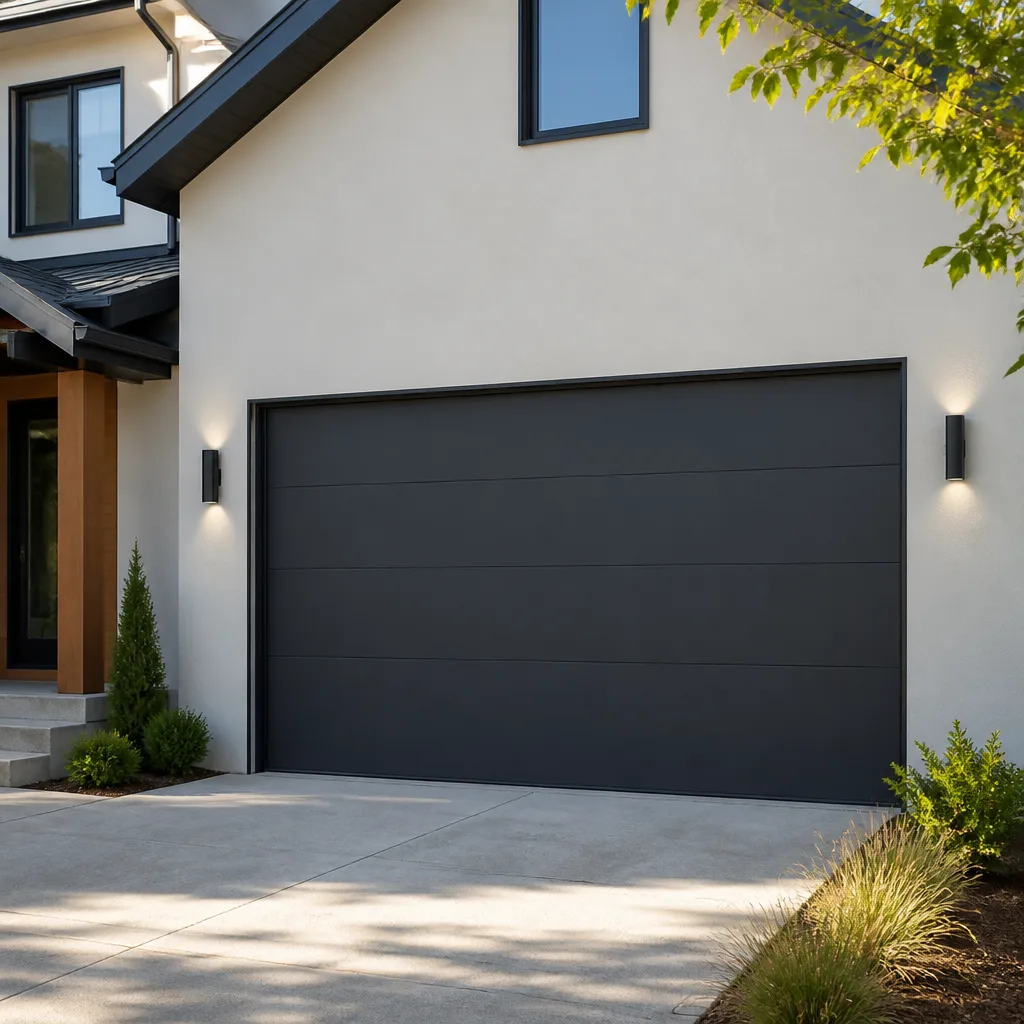 Modern flush
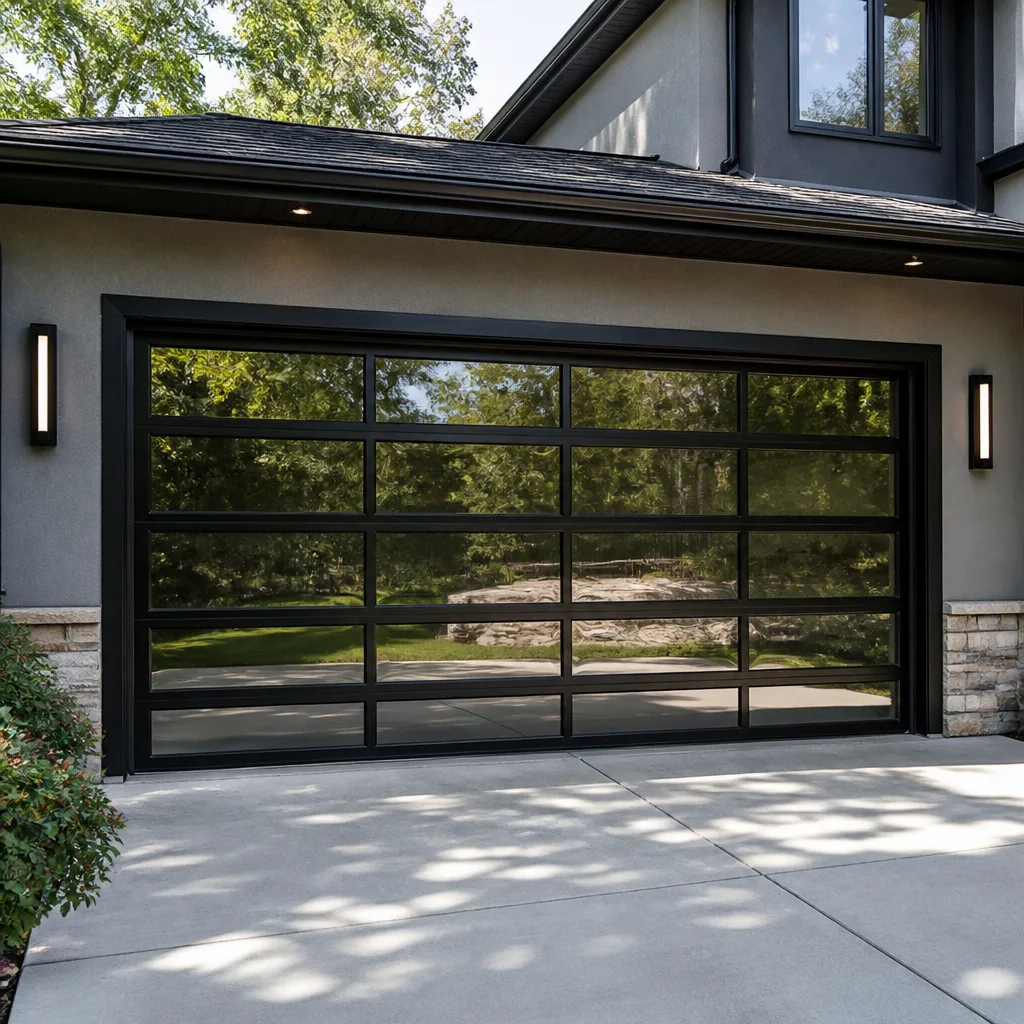 Full-view glass
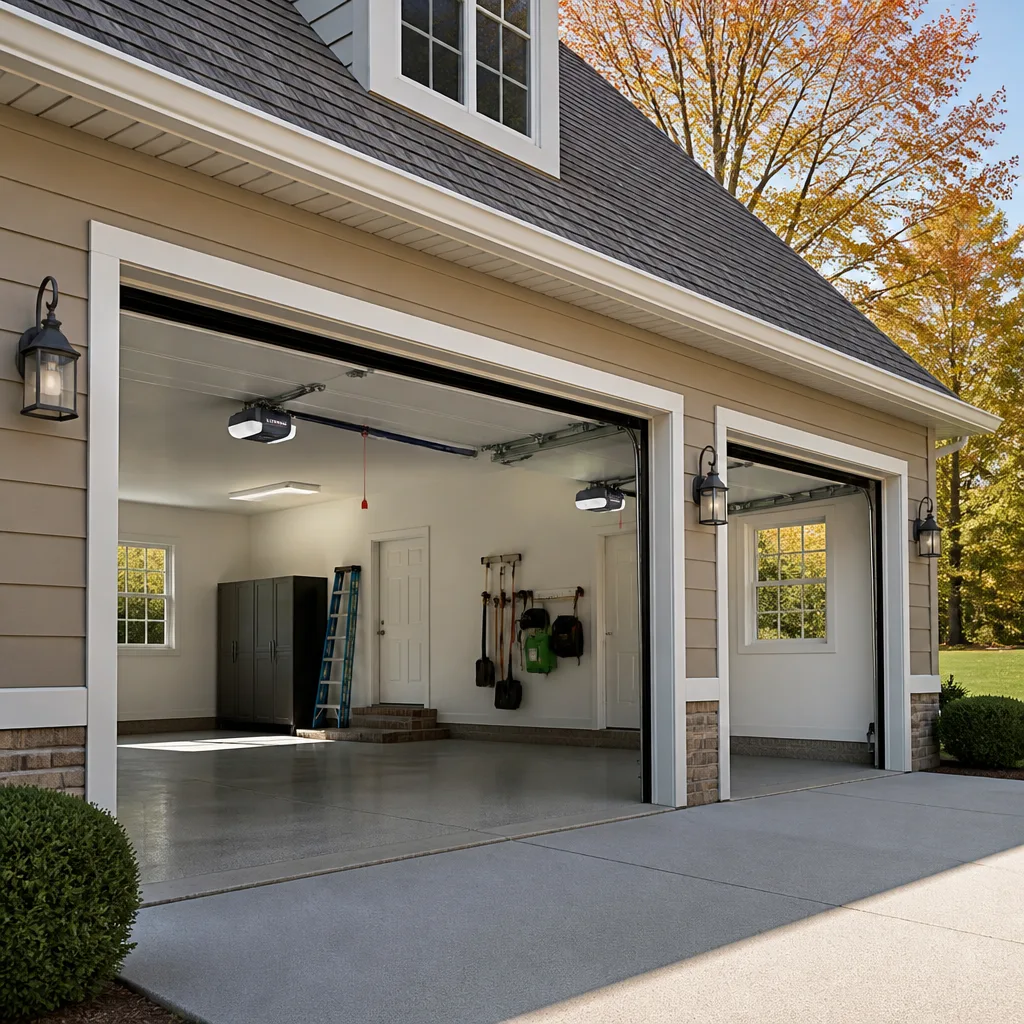 LiftMaster openers
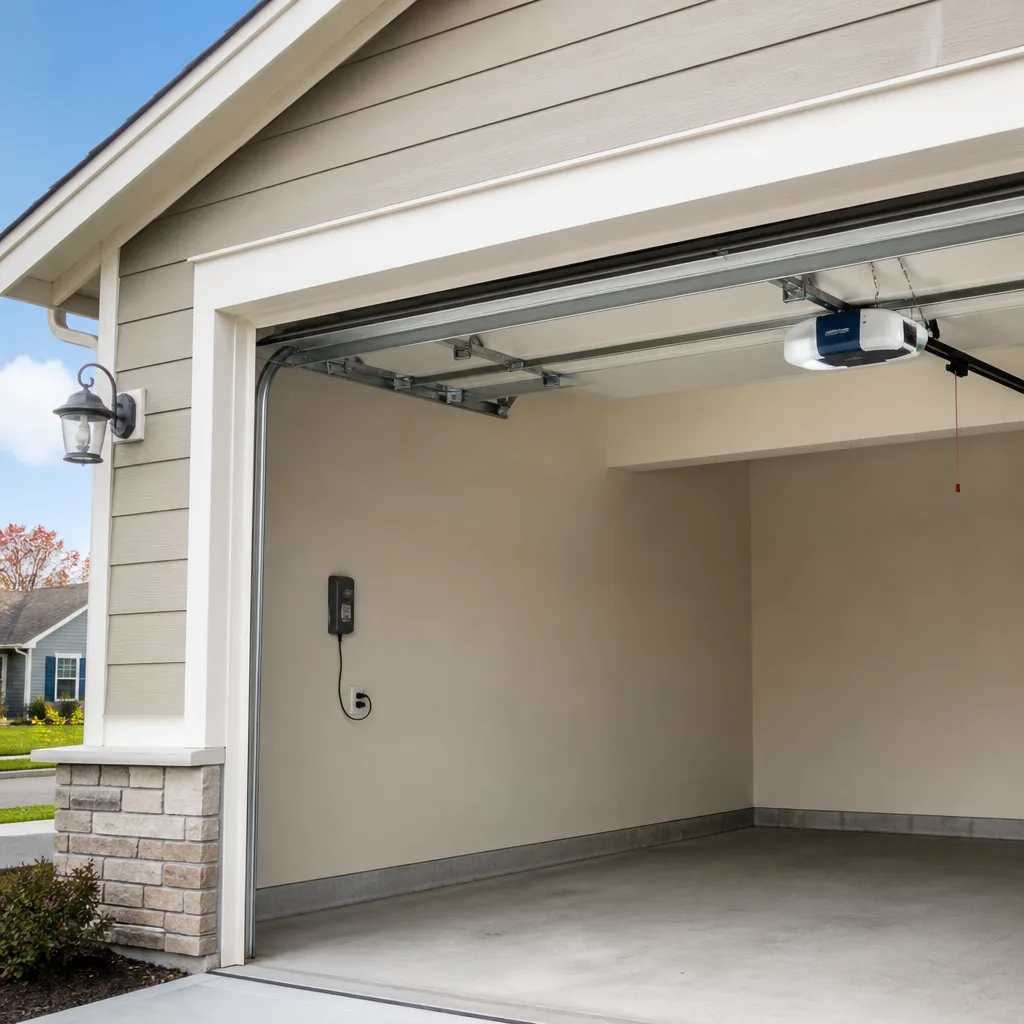 Chamberlain openers
Full 25-point door and opener safety check with every visit - springs, cables, rollers, tracks, and your LiftMaster or Chamberlain opener included
You get a price before we start. It does not change when the truck arrives.
Get your free estimateHow to Hire a Garage Door Contractor in San Diego: A Step-by-Step Guide
San Diego County has more than 1.4 million housing units, and nearly every single-family home has an overhead garage door that weighs between 130 and 400 pounds. That’s a lot of springs under tension, a lot of openers cycling daily, and a lot of homeowners who eventually need to make a hiring decision. Here’s what most of them don’t realize until it’s too late: a meaningful share of the people advertising as garage door contractors in San Diego aren’t garage door contractors at all. They’re general handymen, appliance repair techs, or unlicensed operators working out of a truck with a magnetic sign. This guide will teach you exactly how to separate the real specialists from the generalists before you sign anything or hand over a deposit, and you can explore more guides & resources on our blog.
If you need service now, call (888) 783-4032. Eagle Garage Door Service is a dedicated garage door contractor serving San Diego and surrounding areas with repair, opener repair, and full installation. When you call, you’ll speak with a garage door specialist, not a dispatcher for a multi-trade company.
Styles & brands we work with
Quick Answer
To hire a garage door contractor in San Diego, verify their California CSLB license first, then ask five technical questions about spring sizing, opener compatibility, and track pitch that only a true specialist can answer, confirm they service your specific brand (LiftMaster, Chamberlain, Genie, Clopay, Amarr, Wayne Dalton, Craftsman, or Raynor), and get an itemized written quote before any work begins. Avoid anyone who pressures you to decide same-day, can’t provide a physical San Diego address, prices work over the phone without looking at the door, or refuses to itemize the quote. A legitimate San Diego garage door specialist will show you their license, answer technical questions confidently, and quote a firm price before work starts.
Table of Contents
- Why Hiring the Right Contractor Matters in San Diego
- Step 1: Verify the California Contractor License (CSLB) in Under Two Minutes
- Step 2: Ask These Five Technical Questions Before Booking
- Step 3: Confirm Brand Expertise and Manufacturer Authorization
- Step 4: Watch for San Diego-Specific Red Flags
- Step 5: How to Read a Garage Door Quote in San Diego
- Common Mistakes to Avoid
- When to Call a Professional
- Frequently Asked Questions
- The Bottom Line
Why Hiring the Right Contractor Matters in San Diego
Garage doors are the largest moving part in your home, and in San Diego’s coastal climate, they take a beating from salt air, temperature swings between inland valleys and ocean-facing neighborhoods, and daily UV exposure that degrades seals and weatherstripping faster than homeowners expect. A door that works fine in Clairemont might fail differently than the same model in Chula Vista because coastal moisture corrodes hardware components like hinges, rollers, and spring anchoring brackets at different rates. This is exactly why San Diego homeowners need a specialist who understands local conditions, not a handyman who fixes a door the same way he’d patch a fence in La Jolla or pressure wash a deck in Carlsbad. For a deeper look at protecting your door year-round, see our Seasonal Garage Door Care for San Diego: Year-Round Homeowner’s Guide.
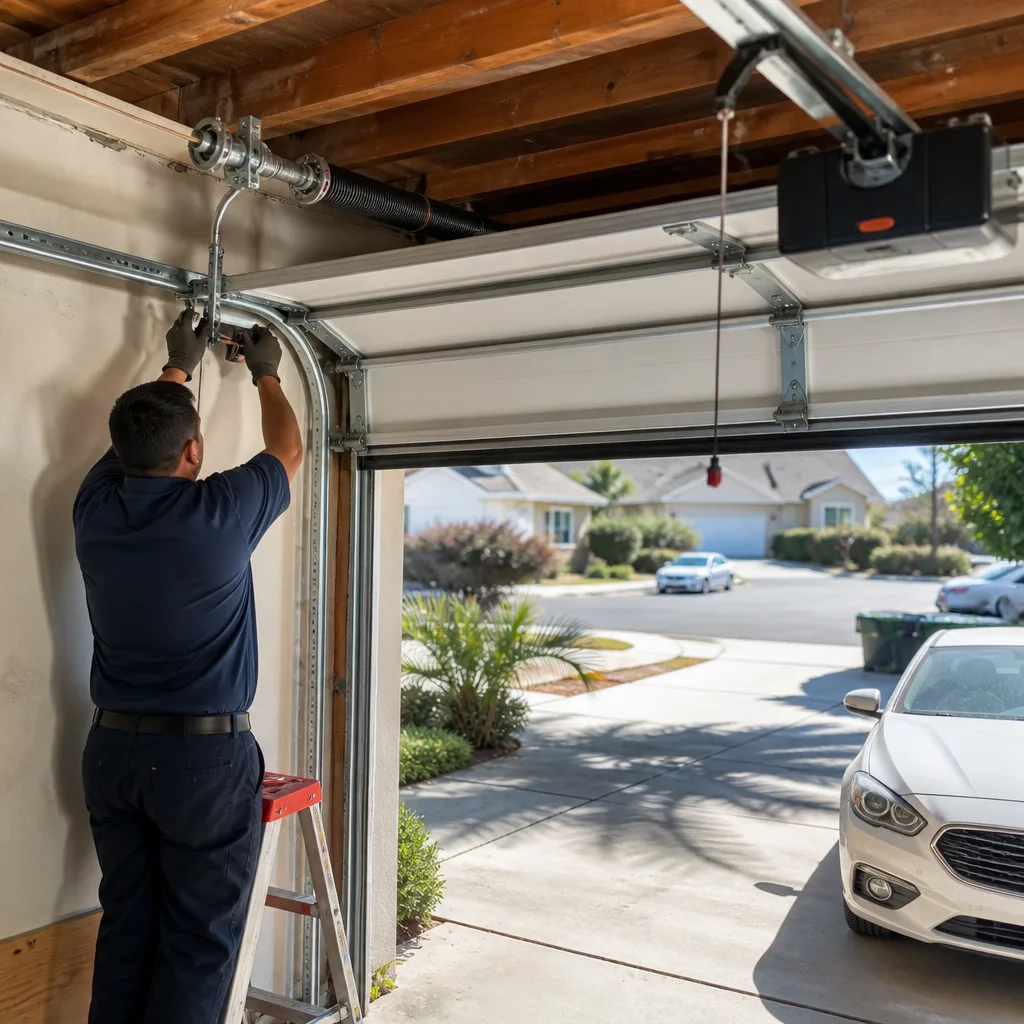
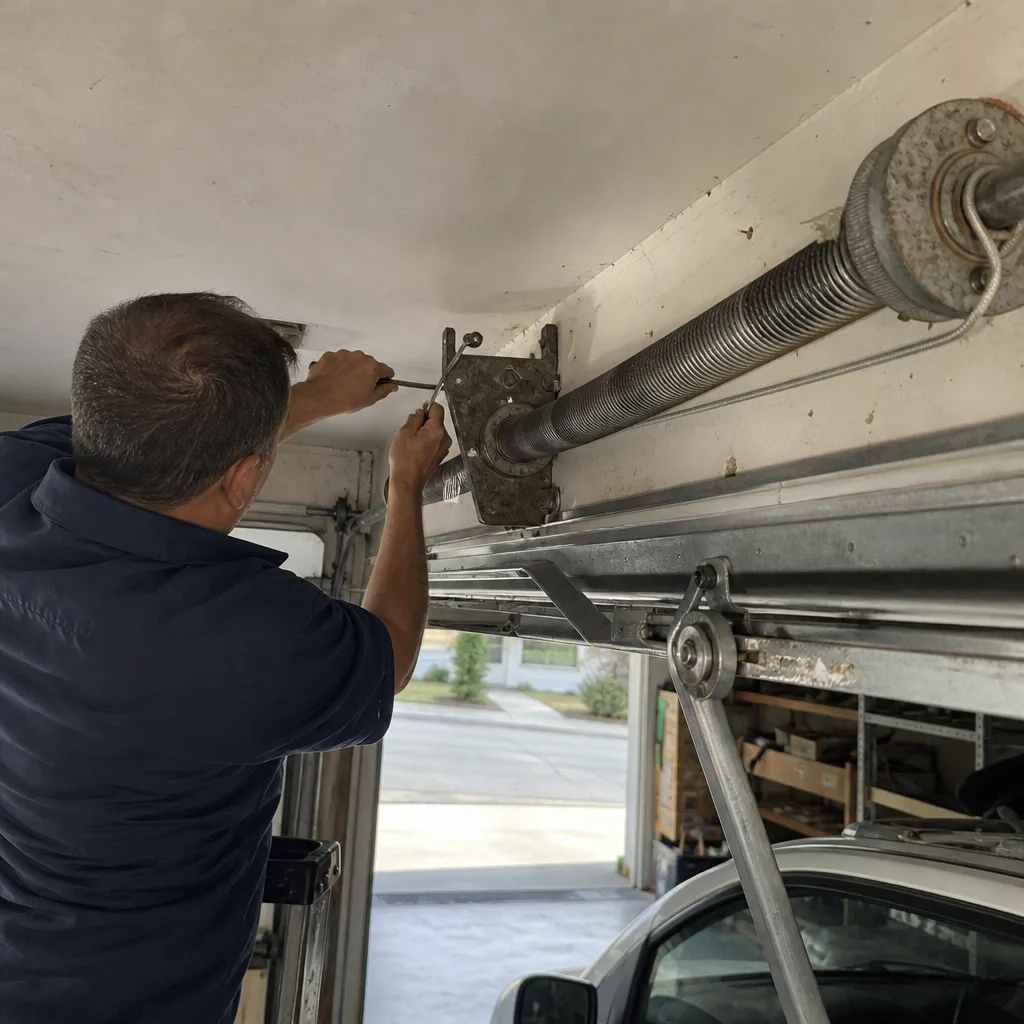
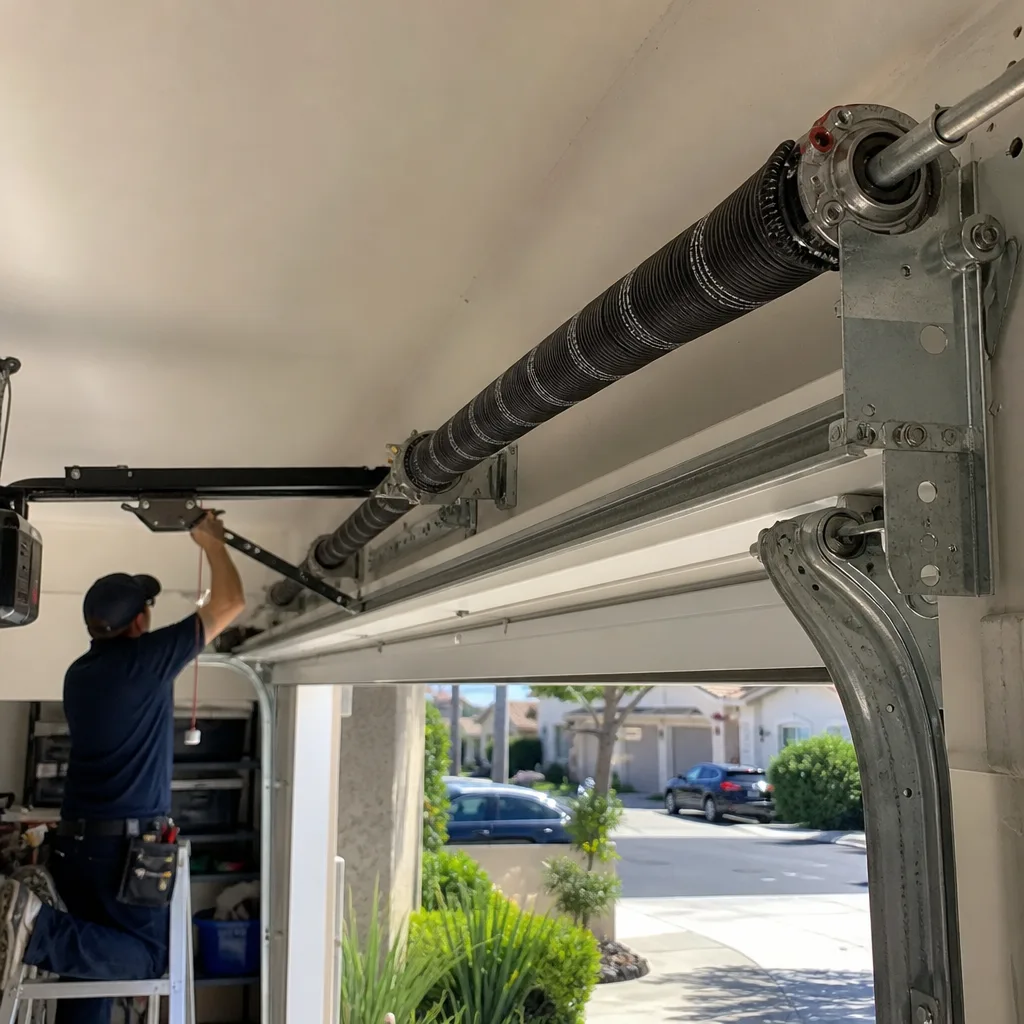
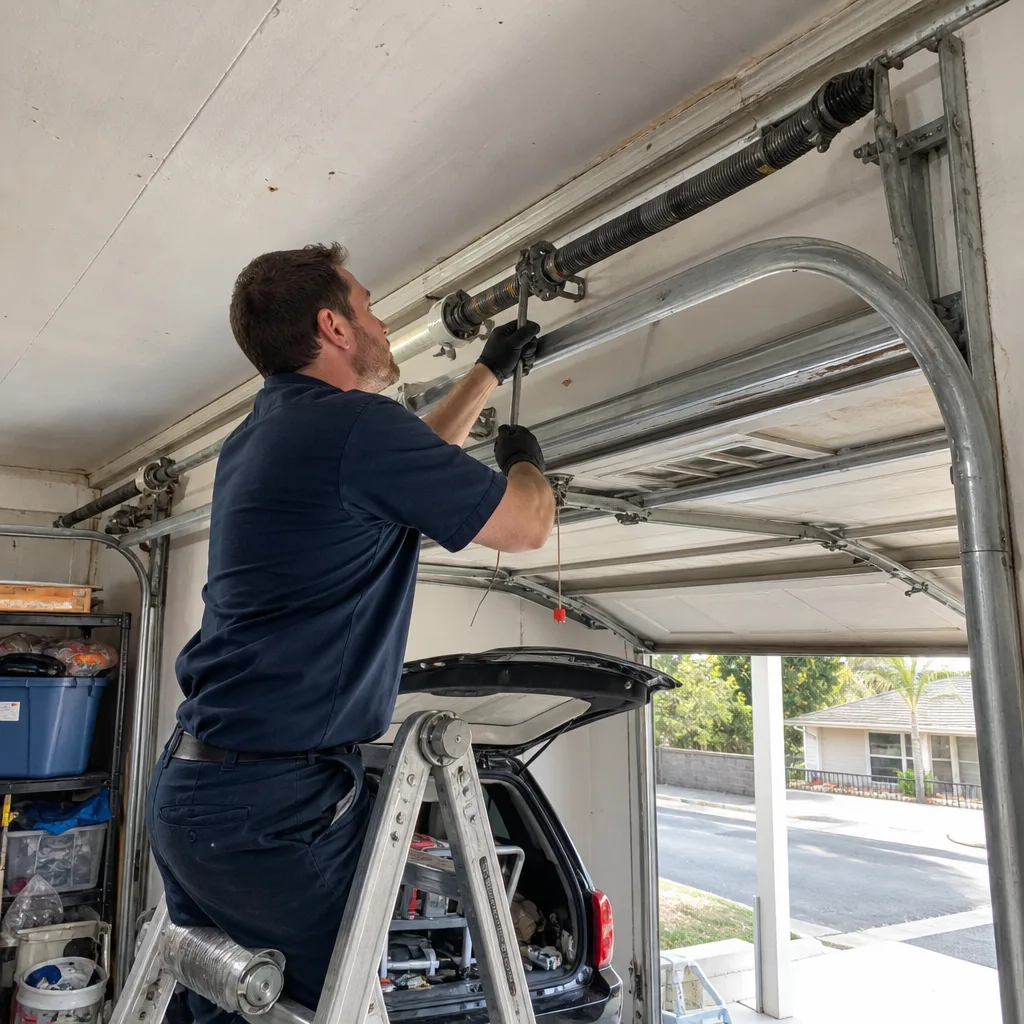
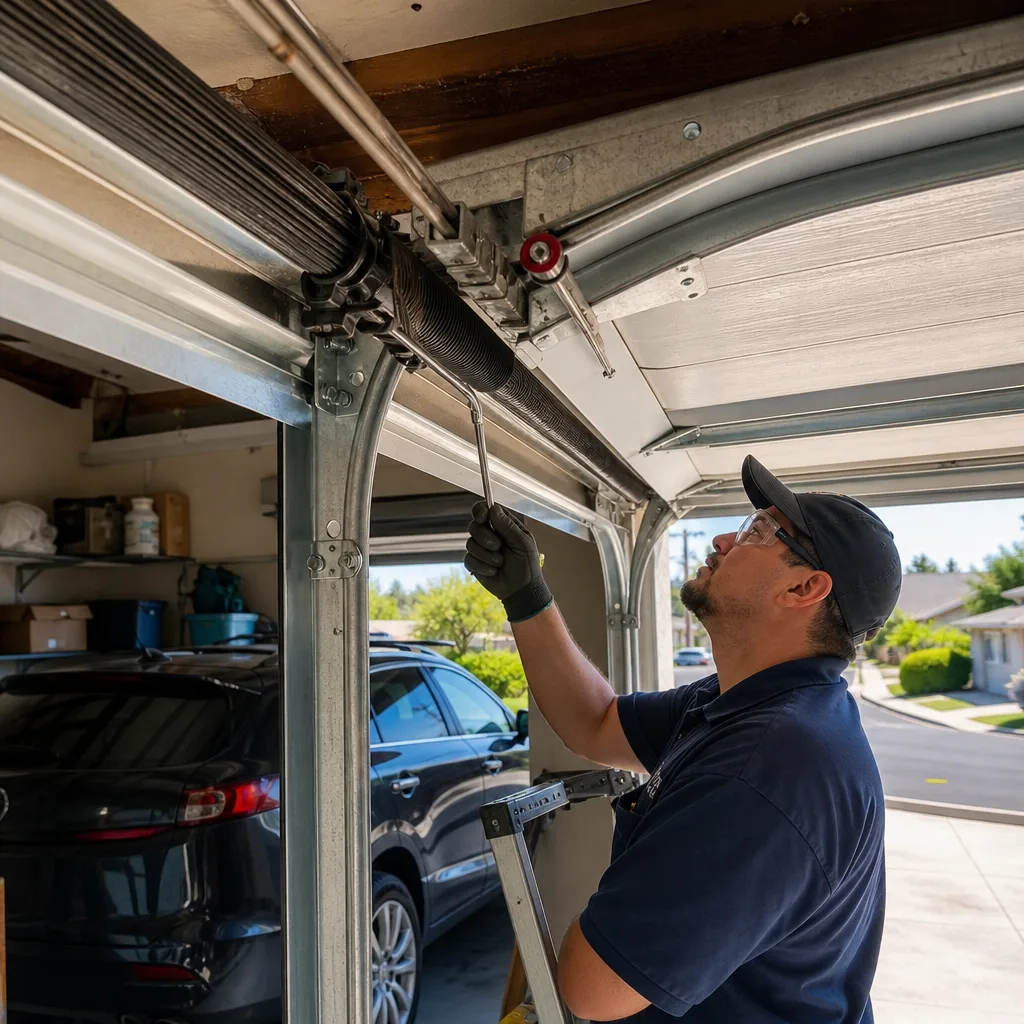
A badly tensioned torsion spring, misaligned track, or improperly set opener limit can damage the door, burn out the motor, or in the worst case, cause a cable to snap under load and send a 300-pound door off its tracks. Garage door springs are under enough tension to cause serious injury or death if mishandled. This is not a job for guesswork. In our experience, a single-trade focus matters: a technician who does garage doors exclusively has seen thousands of failures across every major brand and doesn’t waste your time or money diagnosing by trial and error.
Eagle Garage Door Service specializes exclusively in garage doors. It’s all we do. We don’t clean gutters, repair fences, or install window screens. Every job is a garage door job, which means our technicians bring deeper diagnostic skill than a generalist who splits attention across plumbing, HVAC, and electrical work. For homeowners upgrading, replacing, or building new, we handle the complete lifecycle: garage door repair, garage door opener repair, and garage door installation. You never need a second company as your needs evolve.
Step 1: Verify the California Contractor License (CSLB) in Under Two Minutes
California requires any contractor performing work valued at $500 or more, including labor and materials, to hold a valid license from the Contractors State License Board (CSLB). Garage door installation and repair falls under the C-61/D-28 (Door and Gate) specialty classification, or under a general building contractor license (Class B) for full installations tied to larger remodeling projects. A handyman with no CSLB license is legally limited to jobs under $500 in combined labor and materials, which effectively disqualifies him from most garage door work, since even a basic spring replacement with parts and labor typically exceeds that threshold in San Diego.
Here’s how to verify a CSLB license in under two minutes:
- Go to the CSLB website at cslb.ca.gov and click “Check a License.”
- Enter the contractor’s name, business name, or license number, then select the correct entity from the results.
- Confirm the license status reads “Active” and the expiration date is in the future.
- Check the classification. For garage door work, look for C-61/D-28 (Door and Gate) or B (General Building).
- Verify the business name and address on file match the company you’re talking to. A disconnect here is a red flag.
- Look for any workers’ compensation insurance status; legitimate employers carry it, and unlicensed operators usually don’t.
It’s a two-minute check that saves homeowners from hiring unlicensed operators who can disappear after a botched spring installation leaves the door stuck open or, worse, damages the opener and track assembly. A licensed contractor has something to lose a license, an insurance record, a paper trail. An unlicensed operator has a burner phone and a Craigslist ad. The difference matters.
Step 2: Ask These Five Technical Questions Before Booking
Here’s a test that works remarkably well. Call a contractor and ask these five questions. A real San Diego garage door specialist answers them without hesitating. A generalist stalls, changes the subject, or gives an answer so vague it means nothing.
- What size torsion spring does my door need, and how do you calculate it? The correct answer involves measuring the wire gauge, inside diameter, length, and wind direction (left or right). A specialist knows that a 16×7 door with standard lift hardware usually takes a different spring than a door with high-lift track, and that spring sizing is a calculation, not a guess. A generalist often replies “we’ll figure it out when we get there,” which tells you he doesn’t stock springs or understand the tension math.
- How do you set the opener force and travel limits? A specialist talks about the specific procedure for your opener brand: LiftMaster and Chamberlain units have different limit-setting sequences than Genie or Craftsman, and newer models with DC motors and belt drives require different force profiles than older AC chain-drive units. A generalist might say “I just adjust it until it works,” which is how doors end up reversing mid-cycle or failing to close fully.
- What’s the pitch of my track, and why does it matter? The correct answer: residential track pitch is typically 15 degrees for standard lift or 32 degrees for low-headroom setups, and getting it wrong causes the door to bind, scrape, or come off the track entirely. A specialist measures the track angle and confirms it matches the door’s weight and balance. A generalist doesn’t own a level and doesn’t know what pitch means.
- What’s the difference between extension springs and torsion springs, and which does my door have? A specialist explains that torsion springs wind above the door on a shaft and are safer, longer-lasting, and standard on most modern San Diego installations; extension springs stretch along the horizontal track and are common on older homes. A generalist might not know there are two types. This question alone filters out a surprising number of applicants.
- How do you confirm the door is balanced after a spring replacement? The correct answer: release the opener, manually lift the door to half height, and let go. A properly balanced door stays in place; one that drifts up or down indicates incorrect spring tension. A specialist performs this check on every job and shows you the result. A generalist often skips it, which is how you end up with an opener working against an unbalanced door and burning out its motor in 18 months.
If the person on the phone can’t answer these, keep looking. Same specialist who diagnoses the problem fixes it. That’s how Eagle Garage Door Service operates, and it’s how every legitimate San Diego garage door contractor should operate, too.
Step 3: Confirm Brand Expertise and Manufacturer Authorization
Garage door brands are not interchangeable, and neither are the technicians who service them. A LiftMaster opener from 2018 has different logic board architecture than a Chamberlain myQ unit from 2023, and a Wayne Dalton torquemaster spring system is mechanically distinct from the torsion setups used by Clopay or Amarr doors. If a contractor has never worked on a Raynor torsion system or a Craftsman legacy opener from the 1990s, they’ll learn on your dime and your door becomes the practice project.
Eagle Garage Door Service is certified or experienced to service eight major brands: LiftMaster, Chamberlain, Genie, Clopay, Amarr, Wayne Dalton, Craftsman, and Raynor. That covers virtually any system a San Diego homeowner is likely to own. We’re brand-agnostic: we service competing manufacturers’ systems, so you’re never locked into a single brand’s network or forced to replace a door prematurely because someone doesn’t stock the right parts. Your LiftMaster system is one we know inside and out, and the same goes for a 20-year-old Wayne Dalton door in an older San Diego neighborhood.
Why manufacturer authorization matters for warranty claims: Most manufacturers, including LiftMaster, Chamberlain, and Wayne Dalton, require warranty work to be performed by a qualified technician familiar with their systems. If you hire an unqualified contractor who damages your opener during a spring repair, the manufacturer can deny the warranty claim citing improper service. A specialist who knows the brand’s installation and service requirements protects your warranty. Ask the contractor: “Are you authorized or experienced with my specific opener brand?” and listen for a specific answer, not “we work with all brands.”
Step 4: Watch for San Diego-Specific Red Flags
The San Diego market has a few distinctive hiring risks, and knowing them before you start calling will save you time and money.
- Out-of-area phone numbers routing to local subcontractors. A contractor advertising in San Diego with a 619, 858, or 760 number but who actually dispatches from Los Angeles, Riverside, or Orange County is often brokering the job to a local subcontractor. That subcontractor may be competent, but you’re now two layers removed from accountability, and warranty follow-up becomes a phone-tag nightmare. Ask where the technician is dispatched from and whether the person you’re talking to is the one who’ll show up.
- No physical San Diego address. A legitimate contractor has a place of business in the county, even if it’s a modest shop in El Cajon, National City, or Kearny Mesa. A contractor who gives only a P.O. box, or whose “address” is a virtual office in downtown San Diego, is often an unlicensed operator hiding behind a professional-looking website. Check the CSLB listing for the physical address, and don’t hire someone without one.
- Same-day pressure tactics. A contractor who insists you must decide today to get a “special price” or says the spring will fail within 24 hours and you’ll be trapped inside your garage is using fear to close a sale. A real specialist gives you time to think, provides a written quote, and leaves the decision in your hands. In our experience, honest contractors don’t need pressure tactics; they need satisfied customers who call again and refer neighbors.
- Phone quotes without seeing the door. A contractor who quotes a price over the phone without asking about the door’s size, weight, spring type, opener brand, or track configuration is guessing. A legitimate estimate requires looking at the door or at least asking detailed questions. “It’s $199 for any spring replacement” is a bait price that becomes $600 once they arrive.
- Unwillingness to provide references or recent local work. A contractor serving San Diego should be able to point to recent jobs in neighborhoods like North Park, Pacific Beach, or Scripps Ranch. If their “recent work” is all in other counties or they won’t share any, that’s a signal the local experience isn’t there.
Step 5: How to Read a Garage Door Quote in San Diego
A professional garage door quote looks like a parts list, not a paragraph. Every line item is separated, quantified, and priced, with labor shown separately from materials. Here’s what to look for:
- Itemized parts: Spring(s) listed by size and type (e.g., “2x .225 x 2″ x 25″ torsion springs, left wind”), cables, rollers, hinges, brackets, weather seal, and lubricant. Vague line items like “hardware kit” or “misc. parts” without specifics suggest the contractor doesn’t know what he’ll actually need or wants room to mark up later.
- Labor rate and estimated hours: A quote should show a labor component, whether it’s a flat rate for the job or an hourly estimate with a not-to-exceed cap. A quote that lumps everything into one number with no break is harder to verify and easier to pad.
- Warranty terms in writing: Look for specific language about what’s covered and for how long. “Lifetime warranty” on a spring is meaningless unless it specifies the spring cycle count (10,000 cycles, 20,000 cycles, etc.), and a legitimate contractor will tell you the cycle rating of the springs being quoted.
- What’s not included: A good quote states exclusions, like “does not include new track” or “does not include opener adjustments beyond reconnecting existing unit.” A quote with no exclusions is often a quote with hidden add-ons waiting on the truck.
Here’s the most important question to ask before you sign anything: “Is this price locked once you see the door?” The answer must be yes. At Eagle Garage Door Service, the price is quoted and agreed before any work starts. If the technician discovers something unexpected, we stop, explain what we found, show you the issue, and get your approval on any change before proceeding. No surprise invoices at the end. That’s how a legitimate San Diego garage door contractor operates.
Common Mistakes to Avoid
- Hiring based on the lowest bid alone. A $89 spring replacement in San Diego is a bait price. Once the technician arrives, the “broken” spring becomes a full “tune-up” with new rollers, cables, and a “safety inspection” that brings the total to $700. Legitimate spring replacements in San Diego typically run $180-$340 for a single spring, $280-$450 for two, depending on spring size and cycle rating. Prices far below that range are almost always subsidized by upsells once the truck is in your driveway.
- Skipping the CSLB license check. It takes two minutes, and it’s the single most reliable predictor of whether the person at your door is a professional with insurance and accountability, or an operator with no license, no insurance, and no recourse for you if something goes wrong.
- Accepting vague warranty language. “We guarantee our work” means nothing. A real warranty specifies parts covered, duration, and cycle count. Get it in writing on the quote before you approve anything.
- Choosing a multi-trade company for a garage door job. A company that also does HVAC, plumbing, and electrical likely has technicians who work on garage doors occasionally, not daily. That means longer diagnostics, more trial-and-error parts swapping, and a higher likelihood of an incorrect fix. A garage door specialist has seen every failure mode across every major brand, and that experience translates to faster, more accurate work.
- Not asking who’s actually coming to your house. Some San Diego companies sell the job with a polished salesperson on the phone, then send a subcontracted technician who doesn’t work for the company. Ask: “Will the person I’m speaking with be the one at my door?” If not, ask who the technician is and whether they’re an employee or a subcontractor.
- Delaying a spring replacement because the door still opens. Springs fail gradually, and a spring that’s lost tension is putting strain on the opener motor, cables, and track every time the door cycles. Waiting until it fails completely often leads to secondary damage that triples the repair bill. If you hear a loud snap from the garage or notice the door feeling heavier, call a San Diego specialist immediately.
When to Call a Professional
Garage door springs are under extreme tension, and attempting to replace or adjust them without proper training, tools, and respect for the forces involved can cause serious injury or death. This is not a DIY project. If you hear a loud bang from the garage, notice the door hanging unevenly, see a visible gap in the spring, or find the door suddenly heavy and hard to lift, the spring has failed. Call a licensed San Diego garage door contractor. Cables are equally dangerous: a frayed or snapped cable under tension can whip with enough force to cause severe lacerations. If you see frayed strands on a cable, do not operate the door. Opener issues involving electrical components, logic boards, or safety sensor misalignment also warrant a professional diagnosis, especially on newer smart-home openers with integrated myQ systems. Eagle Garage Door Service offers free estimates in San Diego. Call (888) 783-4032 and we’ll send a specialist to assess your door.
Frequently Asked Questions
Garage door repair in San Diego typically ranges from $120 for minor fixes like sensor realignment or roller replacement to $180-$340 for a single torsion spring replacement, and $280-$450 for a double spring replacement with higher-cycle springs. Opener repairs range $150-$400 depending on the component. Full door replacements run $1,200-$4,000 for a standard two-car garage door depending on material, insulation, and brand. These are San Diego market prices reflecting local labor rates and parts costs. Call (888) 783-4032 for an exact quote, and the price quoted is the price you pay before any work starts.
Check the CSLB website at cslb.ca.gov, enter the contractor’s name or license number, and confirm the license is active, in the correct classification (C-61/D-28 Door and Gate or B General Building), and matches the company’s name and address. This takes under two minutes and is the most important verification step a San Diego homeowner can take before hiring anyone.
In California, a handyman without a CSLB license is limited to projects where the total labor and materials are under $500. Most garage door repairs, including spring replacement, exceed that threshold once parts and labor are combined. A licensed contractor carries insurance, workers’ compensation, and has a bond on file with the state. Hiring a licensed specialist protects you if something goes wrong.
Eagle Garage Door Service is certified or experienced to service eight major brands: LiftMaster, Chamberlain, Genie, Clopay, Amarr, Wayne Dalton, Craftsman, and Raynor. That covers virtually every garage door and opener system a San Diego homeowner is likely to have, whether it’s a modern LiftMaster myQ opener or a legacy Craftsman or Wayne Dalton system from decades past.
Yes, Eagle Garage Door Service offers same-day service for most repair calls in San Diego, including emergency spring replacement. When a spring fails, your garage becomes unusable and your home’s security is compromised, so we prioritize repair calls and dispatch a specialist quickly. Call (888) 783-4032 to check same-day availability.
No. At Eagle Garage Door Service, the price is quoted and agreed before any work starts. If the technician discovers an unexpected issue during the repair, we stop, explain what we found, show you the problem, and get your approval on any change before proceeding. You’ll never receive a surprise invoice. That’s how a professional San Diego garage door contractor operates.
The Bottom Line
Hiring a garage door contractor in San Diego comes down to verification: check the CSLB license, ask the five technical questions, confirm brand experience, and read the quote before you sign. A real specialist answers your questions directly, shows up with the right parts on the truck, quotes a firm price, and stands behind the work with a written warranty. A generalist stalls on details, pressures you to decide fast, and pads the invoice after the fact. Eagle Garage Door Service specializes exclusively in garage doors, serving the complete lifecycle from repair to opener service to new installation, across eight major brands. When you’re ready for a professional who treats your door as a system, not a side job, call (888) 783-4032 for a free estimate. We’ll give you an honest recommendation, not the most profitable one.
Written by the team at Eagle Garage Door Service, serving San Diego since 2015.
See the difference
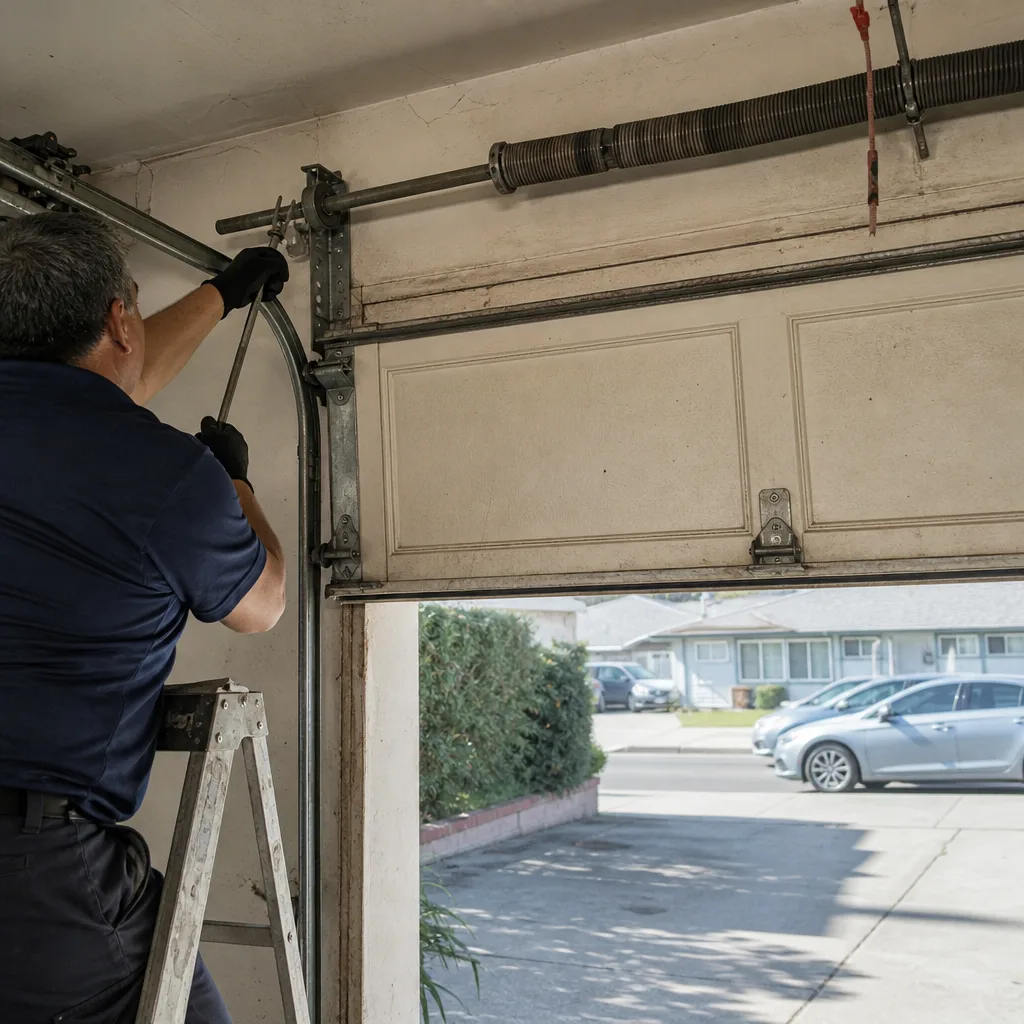 Before
 After
 Before
 After
 Before
 After